Age-adapted BokRobot book
Notes from the Underground for age 10
Dostoyevsky, Fyodor
15 pages · 2,920 words English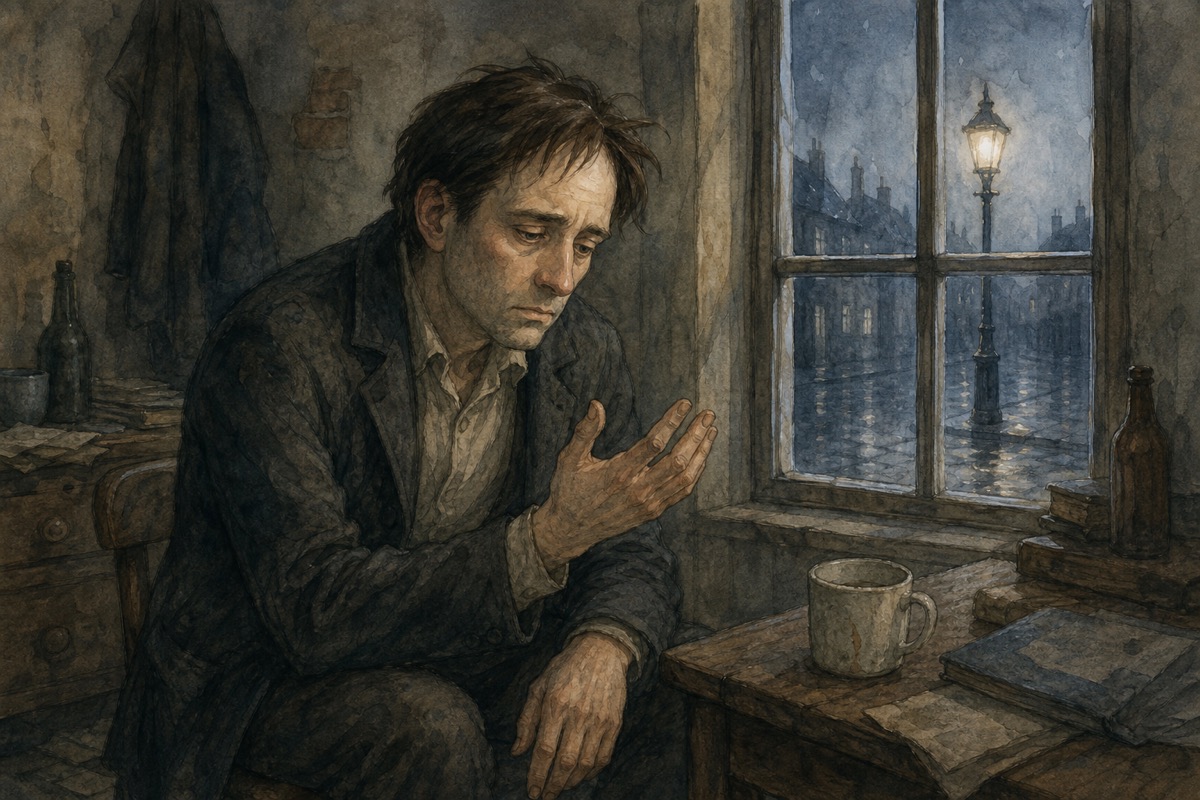
I am a sick man, I tell myself. Not because I cough, but because I often hurt myself on purpose. Like holding your hand too long over a warm pot just to feel that you can. I have lived in a tiny, dirty room on the edge of Petersburg for many years. Outside it is cold and wet; inside it smells of old dust. I am forty, but inside I sometimes feel like an angry child and other times like a stone. I used to work in an office. I was rude and mean to people who asked for help, not for money, but because it gave me a small, dark pleasure. An officer used to carry his sword so it clinked. I hated the sound. I decided he should stop. I spent a year and a half scheming, waiting, and glaring. Finally, it clinked no more. It was a victory only I knew about. Such things made me proud and sick at the same time.
I envy the straightforward people who walk straight ahead like oxen. They bump their head against a wall, and when they feel it is hard, they just say: a wall is a wall, and then they move on or give up. They are calm inside. I am not like that. I am like a mouse in the wall that gnaws and gnaws and never gets out. I know that two times two is four. It is as true as a wall. But sometimes I want to shout two times two is five, just to feel that I am free. Is that stupid? Yes. But sometimes a person would rather do something stupid than be ruled by tables and rules that tell everything in advance.
When I was twenty-four, I lived as if in a dark cellar even though I had an apartment. At the office, I looked down. I was sure everyone hated me. It was I who hated myself, but I did not know it. In the evenings, I went places where no one knew me. Once I stood and watched a man thrown out a tavern window. It was awful, but deep inside I was jealous. At least that man felt alive. I went in to be thrown out too. Instead, a tall officer moved me gently aside, as if I were a fly in his way. He did not even look at me. If he had hit me, maybe I could have lived with it. But being moved aside like nothing, I never forgot.
When I could not bear living, I dreamed of being great, brave, and good. The dreams were like a set table in an empty room. They kept me going for a while. When I got too excited by all the grand things, I would go for tea at my boss's house. There we talked about salaries, winter boots, and the new fireplace. Such evenings put a cold lid on me, and I stopped wanting to embrace all of humanity for a while.
The wine came on the table. They toasted to Zverkov, to his future, to youth. I refused to drink. I stood up and said I hated phrases and snobbery, and that I loved justice. Then I toasted anyway, for Zverkov to charm ladies and to shoot the fatherland's enemies. It was all stupid. They looked at each other, not at me. Ferfitschkin laughed. I went wild. I wanted a duel, but I remained seated. I paced back and forth in the room, dizzy with pride and shame. They talked about their things and laughed, and it hurt more than if they had scolded me. At eleven o'clock they were to go on to Olympia. On the stairs, I asked Simonov for six rubles. He threw them at me, like to a beggar.
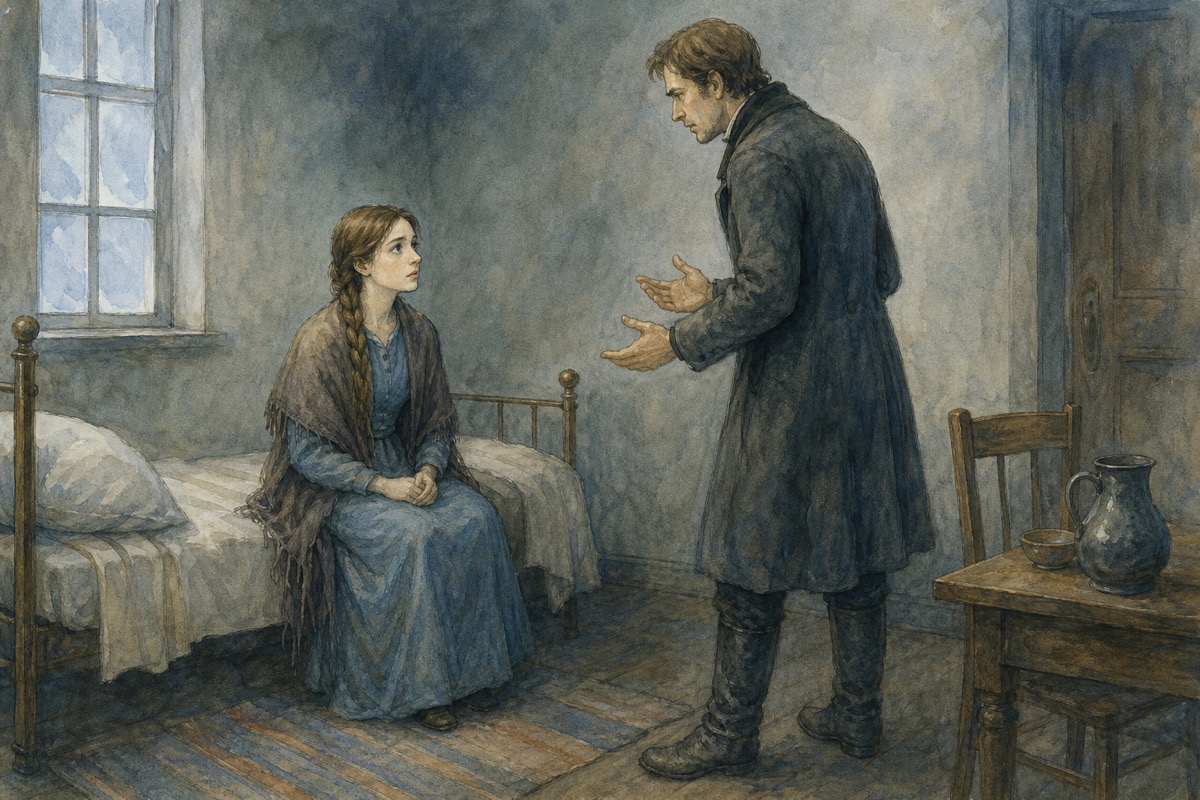
She entered quietly. She was about my age. Her eyes were clear in a way that made me look down for a moment. We did not say much. I asked where she came from. Riga, she said. Her parents were merchants. She had been in the house for two weeks. She answered shortly, but honestly. Then the hard voice in me wanted to talk at length, as I sometimes do when I want to steer others' thoughts. I told her about once seeing a coffin carried out of a cellar brothel. Slush gathered on the lid. Grim, I said. She asked why weather matters to the dead. I said it is worse to be lowered into black, wet earth than into dry. She looked at me. Why should she die, she asked. Not now, I said. But someday. I began to paint a terrible future for her, as if I owned it. I said she would sink house by house, that men and madams would use her up, that she might die of sickness in a hospital. I said it all with a cold certainty I did not really have.
Next morning everything shrank in my head. I sent Apollon with six rubles and a note to Simonov pretending I had been too drunk. That calmed me for a while. Then came a new worry: Liza might come. I saw my room through her eyes. The brown sofa with white stuffing poking out. My robe that did not meet at the waist. The yellow spot on my trousers. My lies. My servant. Apollon is my servant. He likes to read psalms, kill rats, and stare coldly. He works slowly, as if each step is a favor he grants me out of grace. I had tolerated him for long. Now I decided to punish him. I would not pay him on the day as usual. I would wait. He would ask first. I dreamed of it for two years. Now I would do it. I waited for him to bow his head. I also waited, without saying it aloud, for Liza to knock.
Liza came. First Apollon entered the room and stood staring at me without saying anything. Then he left. Then he came again and almost adjusted his needle to show he despised me. I cracked early. I shouted at him, threatened police, grabbed his arm. Then the outer door opened slowly. I did not hear footsteps. I only saw a shadow in the doorway. Then I realized Liza had come in the middle of my tantrum. I ran in and pressed my forehead against the wall. I wanted to tear out my shame with my hands. Apollon came in and said calmly that a woman was asking for me. I went out. Liza stood there. Her eyes were both scared and brave. We sat down. I began to talk in a hurry. That she must excuse me. That I was poor but honest. That I was almost proud of my poverty. With each word I sank deeper in my chair. I offered tea. I jumped into the hallway and gave Apollon seven rubles just to get him to go buy some food. He took the money slowly, counted it, and asked coldly if I wanted the full portion. He knew he had power. I felt like a prisoner trying to bribe a guard.
I began to talk like a man who wants to cut with words. I said I had tricked her that evening at the brothel. That I had talked about marriage and children to make her cry. I said I liked words and dreams better than people. That I would sell the whole world to be left in peace. That I was more ashamed of my poverty than of theft. That my vanity was so sore that the air hurt. I called myself scoundrel and egoist, as if I could splash the shame onto her dress. I told her to go. I almost shouted. I had not planned what happened next. Liza stood still. She did not look angry. She looked as if she saw right through my lies and out to the naked, little boy screaming inside. She came over and put her arms around me, not as someone who wants to be loved, but as someone who wants to lift another up. I cried. I said they do not let me be good, but it was myself who did not let me. I fell face down on the sofa and sobbed clumsily. She knelt beside me and put her hand on my shoulder.
An hour later the room was smaller than ever. I could not breathe. Liza had gone behind the screen to dress. I tiptoed over and peeked through a crack. She sat with her head by the bedpost and cried quietly. She had understood everything. Not with big words, but with her body: that I had humiliated her twice. First with words, then with what I called tenderness. I tapped softly on the screen. It was my silly signal that she could leave. She jumped up, found her kerchief and hat. When she came out, there was no anger in her face. It was a sad knowing. That stung more than shouting would have. I could not bear it. I grabbed her hand, opened it with force, and placed a blue five-ruble note in it. Then I turned abruptly and went to the window. That way I would hurt enough that I did not have to see her warmth again. It was a cruel thing. I knew it, and yet I did it.
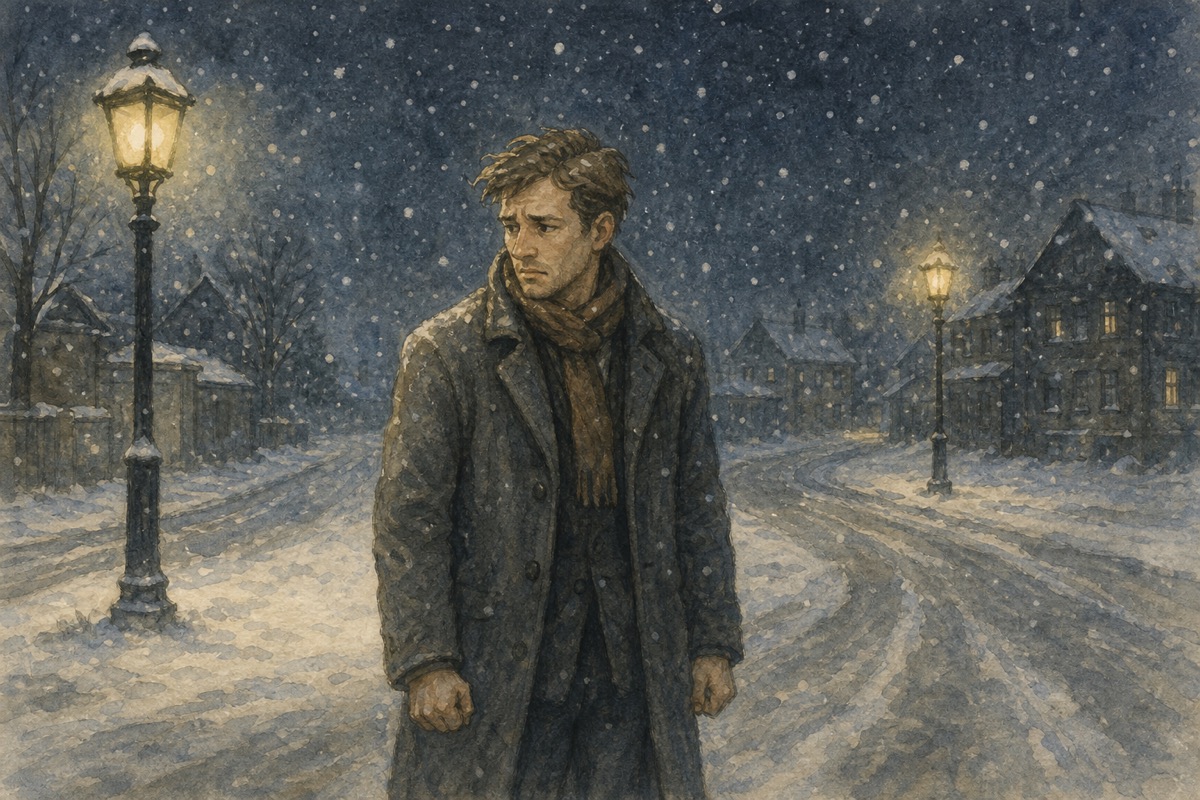
I ran out into the snow. It fell straight down, thick and silent. I reached a crossroads and stopped. Where should I go? Which way had she gone? I stood there seeing white in all directions. My heart beat so hard it hurt my throat. I imagined finding her, falling on my knees in the snow, apologizing, crying until her hands were wet. At the same time, another thought came: if she forgave me now, would I not soon hate her for it? Would I not torment her for having seen me so small? I knew myself. I knew I could make myself good in words and rough in action. I stood in the snow and made myself taller than I was. I told myself it was better for her to go her way with her pride, with her righteous anger. That such anger can be like a wound that heals. That if I dragged her into my life, I would use her up. I said the words so I could stop running. I remained standing.
I never saw Liza again. Not a letter, not a shadow. I told myself it was for the best. That hatred can make one wiser than love. The sentence shone nicely in my head. It closed doors. I walked and repeated it to myself, like a magic spell. But behind the light of the sentence was a darkness. I missed her. I was sick with grief for a while, but I hid it inside me like the mouse hides crumbs behind the baseboard. I could say it was an end. It is, in a way. But I want to say what is true about me, about more than me. For this is not a fairy tale. A novel usually has a hero. I am no hero. I am the opposite. I have made myself small by living in a hole that was not even locked from outside. I said I wanted to be free, but I let my thoughts tie my hands and feet. I did not go out. I cut myself with words and put salt on the wound. It became a habit. An ugly but safe habit.
I have talked about walls and stones. Such things exist in our lives. Some hit their head against them and stop shouting. I go up to the wall and stare and refuse to say that it is good that it is there. Two times two is four. It is true. But when the truth behaves like a rude busybody that blocks my way, I feel like shouting two times two is five. Not because five is true, but because my voice then is still mine. I have talked about toothache. That is how my complaining is. It makes everything worse, but I get a sweet taste of shame when others have to listen. That is how I laugh at myself and others, and then everything becomes uglier. I have talked about the Crystal Palace. A place where everything is calculated. Where people do not need to argue because the rules say what is right. It sounds peaceful, but where would I put all my foolish impulses then? What if they are what keep my heart from turning to stone? I do not want to lay a brick in a house that turns me into a key on an organ someone else plays.
The worst is perhaps not that I hurt Liza. The worst is that I bit the hand I had actually asked for. For that is what I did. I had longed for someone, anyone, who would not laugh and not leave, but stay sitting in my ugly chair and say that I was still something. When she came, I bent and bit. I thought I was guarding my freedom that way. Like a tooth in the cold that freezes if anyone touches it. My pride was a claw I held around myself to keep from falling apart. I mistook that claw for a spine. I have been stubborn as a brick. I have said that the world was wrong, that I did not want to be in the game. I have said that when someone says happiness is to do such and such, I will do the opposite just to prove I am a person of my own. There is something true in that: that a person must be allowed to choose. But what about when my choice just becomes a way to keep everyone else away? What about when my finest idea of freedom becomes a small, rotten room with the curtains drawn?
I will not decorate the ending. I never saw Liza again. She walked out into yellow snow and dark stairs. She left the money note in a small curl on the chair, as if she were putting down a heavy stone. That was the last thing she gave me. Simple dignity. It taught me more than many books. The rest of my life I have made defenses inside my head. Small sentences that glitter like shiny nails. They do not hold walls up. They just keep me away from what makes me alive. Outside, the snow still falls in my thoughts. It falls when I remember the officer moving me with two fingers. When I remember my shoulder against his, and the singing when I came home. When I think of Zverkov's fine coat and bloated words. Of Simonov's cold glance and the clink of coins in my hand. Of Apollon's thread gleaming in the light, and the tea growing cold. Of a face in a screen mirror, of a hand against another, of a difficult word that tasted true for three minutes. This is not a beautiful story. It is ugly and true. It has turning points that hurt, like when a shoulder finally touches and nothing happens, or when a tear becomes a fist that begs for advantage. It has humor, because sometimes I was so small I became big in my own eyes, and that is comical. It has care, because a woman with almost nothing gave me the only right look. It has secrets that were not big but were everything: a spot, a note, a sentence. The rest is silence. I have spoken enough from the underground. If you have listened, you know that sometimes the most important thing in a story is not a palace of glass, but a small room with a broken sofa, where a man finally says something true about himself. That is a place to begin from, if one day he should dare to go up the stairs.