Age-adapted BokRobot book
Botchan (Master Darling) for age 9
Natsume Soseki
15 chapters · 17 pages · 4,830 words English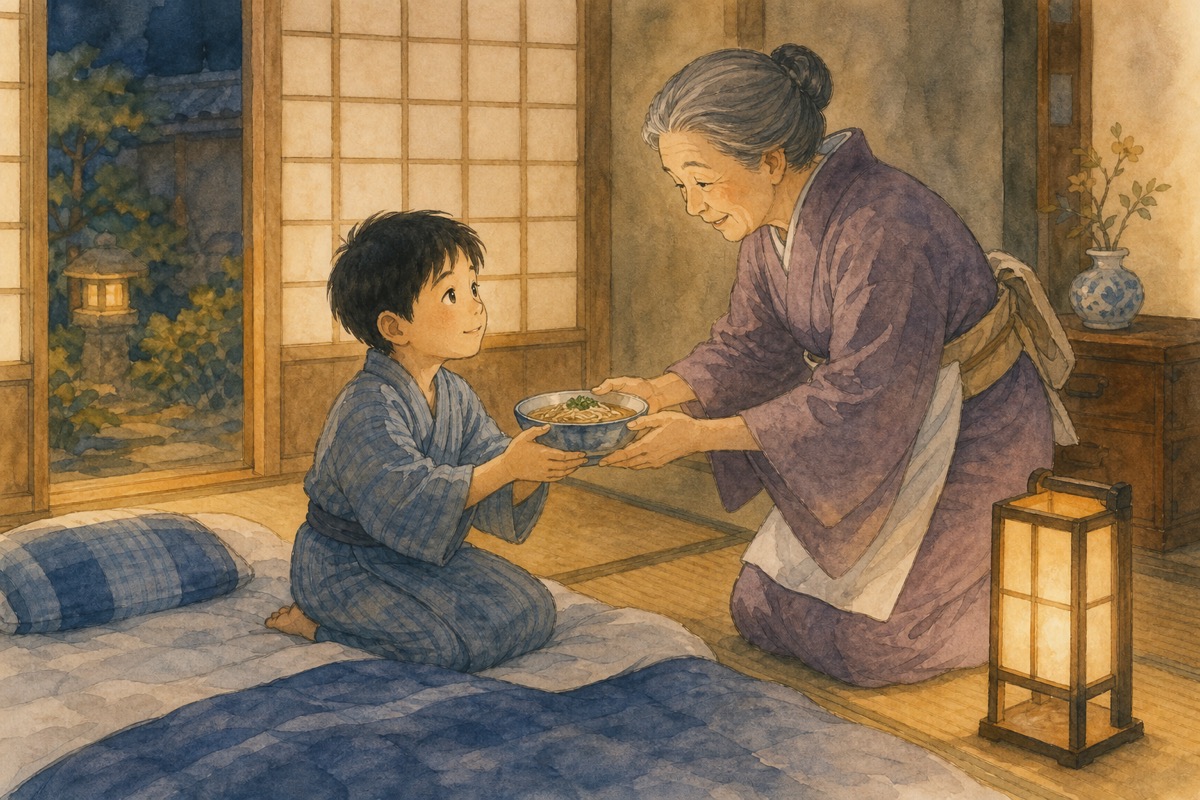
When I was small, I did reckless things. I jumped from the second floor because someone called me a coward. I cut my thumb to prove a knife was sharp. I fought over chestnuts and crashed through fences and carrot patches. Father called me useless. Mother worried I'd never amount to anything. My older brother was handsome and perfect and always mocked me. We fought every other week. Once I hit him in the forehead with a chess piece. Father threatened to cut me out of his will.
Only Kiyo, the maid, stood between me and disaster. She had little schooling, but she believed I could become something good. She snuck me sweets, left warm noodles by my bed on cold nights, and once pressed three yen into my hand. Like a fool, I dropped the money in the latrine. She fished it out with a bamboo stick, dried it carefully, and exchanged it for silver so no one would laugh. She said, 'One day you will have a big house and your own rickshaw. May I be your housekeeper then?' I just nodded. How can you say no to a dream that has already made you its own?
Mother died. Father did nothing sensible. My brother learned English and became a businessman. When Father died too, my brother sold the house and inheritance and disappeared to a job far away. He gave me six hundred yen and said I could do what I wanted. He threw fifty yen at Kiyo, as if he wanted to get rid of both of us. I waved goodbye at the station and never saw him again.
I decided to study for three years, without any real plan. I stumbled into a physics school because I happened to walk past it. I was near the bottom of my class when I finished. Eight days later, I got a job offer as a math teacher in the far south, on an island called Shikoku. The salary was forty yen a month. Me and my recklessness always travel together, so I said yes.
Before I left, I visited Kiyo. She had grown thin and gray in the hair, but her eyes were warm. She said I must start a home immediately, as if a roof and meals fall from the sky. I said I would come back in summer with a surprise from the west. She wanted sweets wrapped in bamboo leaves, completely the wrong thing for my journey. On the platform, she held back tears. As the train pulled out, I stuck my head out the window. She stood alone and grew smaller and smaller.
I arrived by steamship. A boatman in a red loincloth rowed us to shore under a burning sun. The town was mostly a fishing village. At the first inn, they tried to squeeze me into a room under the stairs and lied that all the good rooms were taken. I got angry and gave them five yen as 'tea money' to get away. The next day I got a large room at another inn. I wrote a long letter to Kiyo. I told her the town was boring, the room was wonderful, I had dreamed she was eating bamboo leaves, and I had already nicknamed my colleagues: Badger, Redshirt, Pumpkin, Hedgehog, and Clown.
The principal had a black mustache and round blinking eyes. He looked like a badger, so I called him that in my head. He talked for a long time about how a teacher must be a light for the youth, an example, almost a star in the sky. Forty yen a month to be a saint seemed a bit scarce. The head teacher wore a red flannel shirt year-round, spoke softly and nicely, and I didn't like him from the first moment. I called him Redshirt.
A pale, round English teacher named Koga looked like an overripe pumpkin, so he became Pumpkin. A short, bristly math teacher laughed loudly and sharply, as if he were stabbing. He became Hedgehog. The art teacher floated around in fine clothes and bragged about Tokyo like a cheap actor. He became the Clown. An old, solemn teacher of ancient rules bowed like a grandfather. It felt like a zoo.
Hedgehog came to the inn and sorted out my schedule without ceremony. He also took me to find lodgings. We ended up at Ikagin's, a small curio dealer with a wife who looked like a witch. It was quiet up the hill, and I moved in.
The first day I stood on the platform and heard forty big boys say 'Teacher,' I flinched. In Tokyo, I had been saying 'Teacher' for three years. Now I was the echo. The boys were sturdy and many were taller than me. They spoke in a thick, slow dialect. In the middle of class, the biggest one stood up and said I talked too fast. I said I was a boy from Tokyo. I couldn't speak like them. They would have to wait until they understood. I felt a little braver when I said that. But then a boy asked if I could solve some difficult problems right then and there. I couldn't. I said I would show them next time, and the room filled with jeers. A teacher is not an encyclopedia, and forty yen is not all knowledge.
One evening I ate four bowls of deep-fried noodles. The next morning, someone wrote on the blackboard in chalk: 'Professor Tempura.' I wiped it off, but in the next class, it said: 'Four bowls, but no laughing!' Soon they added rice balls and prices. Every evening I went to the public baths. My towel bled color, so they called me 'Red Towel.' I swam alone in the granite pool. Then a sign appeared: 'No swimming in the pool.' And the next day, the same words on the board. The pettiness was as thick as the air.
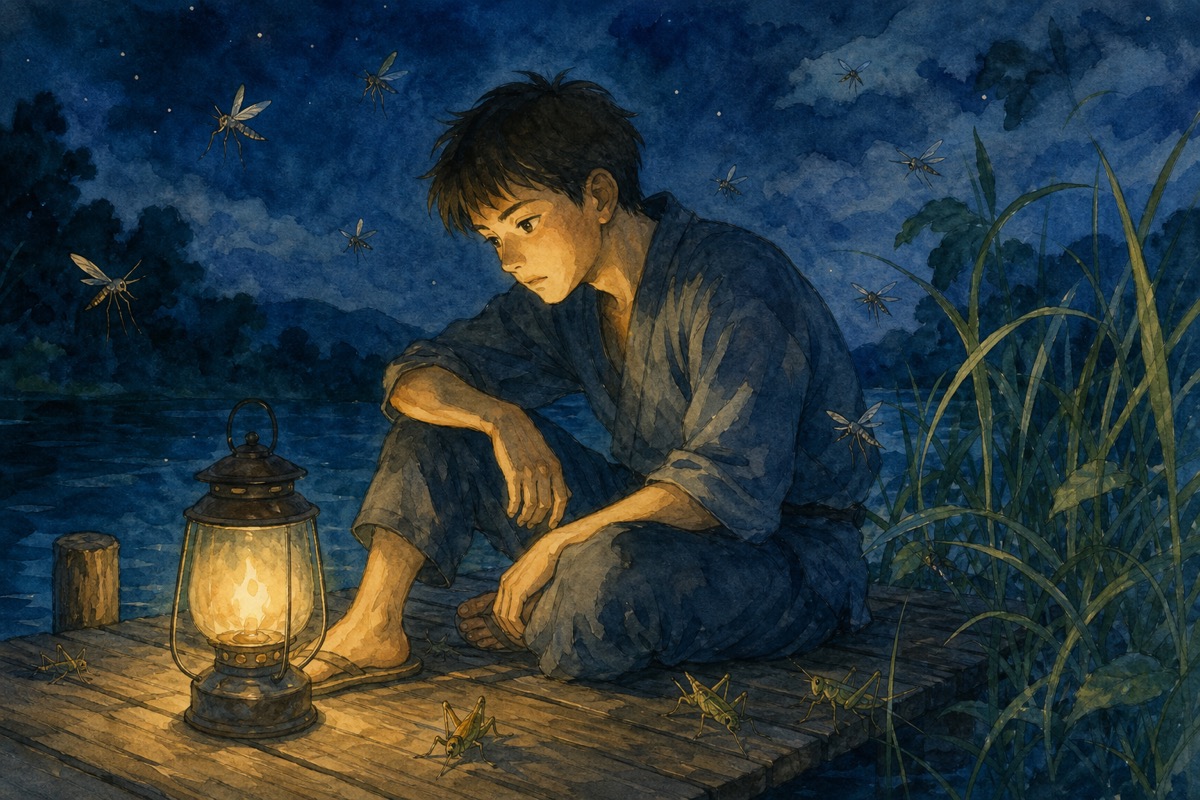
One evening I had night duty at the school. All teachers took a round, except Badger and Redshirt, who were exempted as if they were too important. The duty room was baking in the evening sun. I slipped out to the bathroom to breathe. When I came back, Badger stood there and asked around as if I weren't on duty. I said yes. Then I went in and turned off the lamp.
When I lay down, fifty grasshoppers jumped out of the blanket like stones from a mat. I swatted and swept them out. Six boys from the dormitory laughed loudly and said I had to prove I had swept. They talked in circles with words like 'are they grasshoppers or angels?' and denied everything. A little later, the whole ceiling pounded in rhythm: 'One-two-three-whee!' I ran through dark hallways, tripped on a wooden block they had wedged, banged my knee, and heard them laugh at the end of the hall. I stayed awake the rest of the night. Mosquitoes bit my face, and my pride burned. At dawn, I dragged two boys in. They said nothing. When Badger came, he smoothed everything over with nice words and told me to rest. But I still went to classes, even though my face was covered in bites.
Afterward, Redshirt invited me on a fishing trip. The Clown also came. We rowed past a small island with pines like umbrellas. Redshirt said the view was like a painting by a great artist. The Clown nodded too eagerly.
We anchored in six fathoms. They tried to catch big fish. They only caught skinny small fish, the kind farmers use as fertilizer. The Clown made a joke about Russian books. Redshirt laughed hollowly and said names I didn't care about. I caught a small, slippery fish. The hook stuck, and the feeling of it wriggling in my hand made me sick. I quickly smacked it on the deck board so it died. I lay on my back and watched clouds cut the sky, and I thought of Kiyo. Fresh sea air would have been good for her tired lungs. With her, I wouldn't be ashamed anywhere.
In the boat, they whispered together. They said words like 'tempura' and 'dango' and 'same old Hotta.' They didn't say my name, but I knew they meant me. On the way back, Redshirt said the students liked me, but I had to be careful. In a school, there were many relationships, he said, things I would understand later. I asked him to speak plainly. He wouldn't. He whispered that some people who seemed friendly might not be. Especially those who had found me lodging. He probably meant Hedgehog. If he had something on his mind, he could just say the name.
Next day, I tried to give Hedgehog one and a half sen, the price of the ice water he had bought me the first week. I didn't want to be indebted if he was a snake behind my back. He laughed first, then realized I was serious. He pushed the coins back. I pushed them forward. He took them with a groan. Then he said something that lit me up: I should move. The landlord complained that I was too strict and fussy, that I made them do too much, that he could make more money selling 'art.' I was furious. Then why did he take me there? We argued until the school bell silenced us.
In the afternoon, there was a meeting about the dormitory boys and the night's pranks. They sat around a long table, looking like a cheap restaurant. Badger began nicely, saying it was all due to his lack of virtues. If it really was his fault, he could have resigned before the speech, I thought. Redshirt asked for leniency. The boys were strong and half-aware of their mistake, he said. The Clown agreed completely. I tried to speak, but couldn't find fine words. I just said the boys were deluded and must apologize.
Then Hedgehog stood up. He spoke clearly. To torment a new teacher for no reason was just spite. To be lenient now would lower the whole school's dignity. The school should teach honesty and courage, not lazy shortcuts. He demanded strict punishment and a public apology. My heart leaped. He said everything I couldn't get out. Then he added that my trip to the bathroom during duty was a separate matter and equally serious. I stood up at once, said it was true, and apologized. Some laughed. They always laugh, those who have never known the relief of saying 'I was wrong' right out.
The boys were confined for a week and came to bow to me. Then I didn't want to leave anymore. Afterward came 'advice from the leadership': Teachers should not eat at 'low' places like noodle shops. Only at farewell parties was it allowed. Redshirt gave a little speech about how teachers were upper class and should seek comfort in fishing, books, and poetry. I was tired of his perfume and all his smooth words. I asked if 'meeting the Madonna' was also comfort for the soul. The room fell silent. Redshirt slumped. The Clown looked away. Everyone understood.
That same evening, I left Ikagin's. While I packed, the landlord flattered and scolded in the same sentence. I don't waste breath on such double talk. I jumped into a rickshaw and left. I walked without aim, until I remembered that Pumpkin, Koga, lived in Kajimachi. His mother welcomed me with a paper lantern. Koga listened and arranged a place for me with an old couple, the Hagino family. I moved in.
At the Hagino's, there was peace. The old woman liked to talk. She thought I was married and wondered where my wife was. I laughed and said I was only twenty-four. She said many marry before that. 'I can find you a good wife,' she said. Then she looked at me and said I probably already had a girl in Tokyo, since I asked for letters every day. I thought of Kiyo, but I said nothing.
The old woman knew everything that mattered here. She told me about the town's most beautiful girl. People called her Madonna, a foreign word for very beautiful. The art teacher before the Clown had supposedly said it first. Madonna had been engaged to Koga. Then his father died, and the family became tight. While everything was postponed, Redshirt came with a matchmaker. He fell head over heels, the old woman said, and started visiting Madonna. The family hesitated because Madonna was already promised, but Redshirt came again and again. The rumors were bad. Hedgehog had talked to him about it. Then Redshirt replied nicely that he wouldn't marry until things were properly broken off, but there was nothing wrong with 'visiting' as long as it lasted. After that, Hedgehog and Redshirt were enemies.
Two days later, Kiyo's letter finally came. Her pencil stuttered and trembled across the paper like an old bird. She had written and rewritten. She praised me for being straightforward. She told me to save money and be wise, and sent me back ten yen of what I had given her. She had put the rest in a savings bank for the day we would start a house in Tokyo. I sat on the veranda with the wind in the paper and felt everything around me grow calmer.
The food at the Hagino's was kind but lonely. Sweet potatoes over and over. A little tofu for variety. To keep my body going, I poured raw egg over rice when no one was watching. At the bathhouse near the station, I met Koga. His silence wasn't cold; it was just wounded. Then I heard laughter at the door. A tall, bright girl with her hair pulled tight and neat, and an older woman beside her. They bowed at the entrance, and Koga went over. Shortly after, Redshirt swayed in with a silk belt and a chain. He bowed politely to them and to us, without looking too long at her face. Was that the Madonna? It must be.
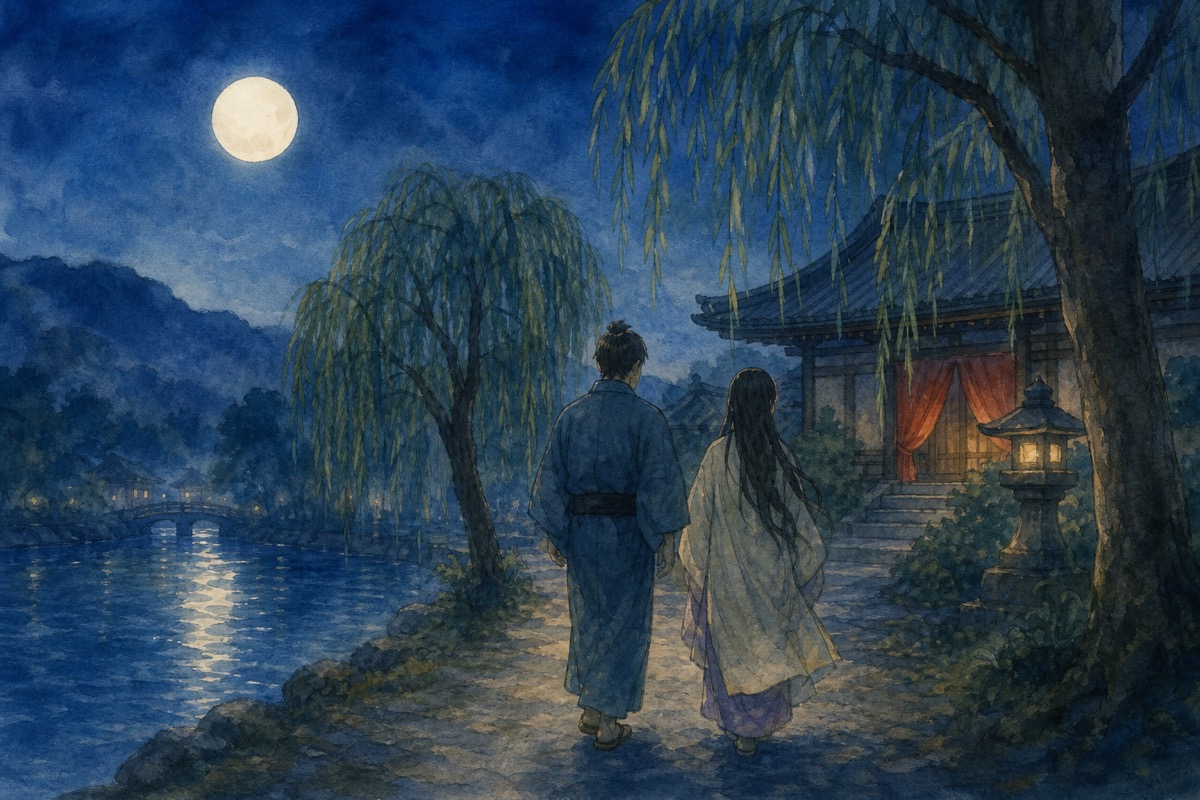
Later, in the moonlight under willow trees, I passed a temple. Along the path, red curtains hung in front of houses where men went in and out. Up on the riverbank, I saw two figures, a man and a woman. When I got closer, the man turned, said a low 'ah,' and led the woman away in silence. It was Redshirt. He wanted to say something else afterward. But in a small town, the night itself punishes those who pretend to be better than they are.
Then I understood that I had been wrong about who to watch out for. Hedgehog could be sharp and angry, but he was open. Redshirt had a mild voice, smelled of tobacco and fine words, and did something entirely different with his other hand.
One evening, Redshirt called me to his house. His house was too big for a single man out here. He praised my work. 'Right man in the right place,' he said. 'Anything good can happen if you stay steady. Maybe we can give you more responsibility. Not more work hours, just more responsibility.' He also hinted that Koga would be moving far away, to a town by the sea. 'He wants it himself,' he said, 'and maybe we can add a little of the salary difference to yours.' His words curled around each other. I nodded and left.
Next day, the old Hagino woman told me that Koga's mother had asked for a little more salary. The principal had answered that the school was unfortunately poor, but they could arrange for the son to get five yen extra somewhere else. 'Everything is already settled,' he supposedly said. 'And we have chosen the new teacher.' It wasn't a wish. It was pressure hidden in fine phrases.
I went back to Redshirt and said no to the raise. He held a lamp when I came. The Clown was inside. 'Have you heard from Koga?' he asked. 'No.' 'From whom then?' 'From an old woman,' I said. 'Oh, so you believe gossip rather than me?' he replied silkily. I don't have patience for speeches that twist like eels. 'I don't like that salary,' I said, 'because it smells wrong.' Then I walked out under the Milky Way and felt lighter.
In the morning, Hedgehog came to my desk and apologized. 'I told you to move because the landlord lied about you when you wouldn't buy fake pictures,' he said. I lifted the one and a half sen from his desk and put it in my pocket. 'Then we're even,' I said. We saw each other for who we were: a boy from Edo and a man from Aizu. Both stubborn. Both straight-backed.
Koga's farewell dinner was held in an old mansion that was now a restaurant. The tables were decorated. Badger sat in the center in formal attire. Redshirt sat on his left. Koga on his right. Badger's speech was nice and empty. Redshirt's speech was nice and even emptier: Koga was leaving 'voluntarily,' everything was in perfect order, they were proud of him. Then Hedgehog stood up. He said polite words that bit at the edges: He wished Koga welcome to a town with honest people, free of high collars and soft voices that catch others in fine smiles. He wished him a good wife soon, and that a certain fickle woman would be ashamed one day. I wanted to clap. Koga stood up and bowed deeply and thanked everyone. He is too good for this world sometimes.
Then came the bottles and small dishes. Soon the Clown started fooling around with a broom, pretending to be a minister. Koga ran around filling glasses for everyone, even those who had sent him away. Pumpkin sat stiff as at a funeral. I tugged his sleeve. 'Let's go,' I whispered. 'What do you owe this nonsense?' The Clown blocked the way with the broom, and I pushed him. He babbled more. Then Hedgehog grabbed him by the back of the neck and laid him on the floor. I laughed quietly all the way home.
Then came the victory parade for the army. The banners fluttered, and eight hundred boys stood in blocks with their teachers in front. On paper, it looked grand. But boys here, like adults here, like to test boundaries. At a corner, middle school and normal school met. One was supposed to go first. The other wouldn't yield. Words turned into shoves. Shoves into blows. In the evening, there were dances and songs in the square. A beautiful sword dance from Kochi took our breath away. Twenty men swung gleaming swords in tight formation. One small mistake, and a nose would be gone. Shouts rose from the side. Now the schools fought again.
Hedgehog jumped in to separate them. I followed. Stones flew. One hit my cheekbone. Another from behind. Someone shouted: 'Throw stones at the big and small teachers!' I pulled a boy away from another. He stepped on me. I sprang up and punched back at the air. Then someone shouted 'Police!' and the crowd ran away like water. Only we remained. We gave our names and explained. The police let us go.
The next day, the newspaper wrote that Hotta from middle school and a rude comrade recently from Tokyo had incited the boys and led the attack. They demanded we be fired as teachers forever. I threw the newspaper in the latrine. At school, the Clown smiled crookedly at my bruise. The students applauded when I came into class. Was it mockery or honor? I didn't know. Redshirt came and said he had already spoken with Badger, that they would demand a retraction, and that he was 'sorry.' Shortly after, Hedgehog was called to the principal and asked to resign. They left me alone. Then something froze inside me. If Hedgehog had to go, so would I.
Badger turned red and white and told me to think about the schedule and my future. 'It doesn't look good to quit after a month,' he said. 'It looks worse to stay when injustice happens,' I replied. He told me to sleep on it. I nodded. Hedgehog said: 'Keep your resignation ready. The time will come.' Then he put his on the table.
Hedgehog disappeared to the public baths. He rented a loft room above an inn called Kadoya. He made a small hole in the paper of the sliding door and watched and watched. 'Redshirt goes there in the evening,' he said. 'There's a singing girl here named Kosuzu. He says teachers shouldn't eat noodles, but he himself slips in to song and sake. We'll catch him in the act.' I agreed. We waited night after night. I am not made for sieges. Hedgehog can stand like a pine tree.
On the eighth night, I came with eight raw eggs in my pockets. The sweet potatoes were wearing on my strength. Hedgehog glowed. He had seen a geisha go in early in the evening. 'Redshirt comes later,' he whispered. 'He likes to go when others sleep.' We turned off the lamp so our heads wouldn't show on the paper. We listened. A black hat stopped under a gas lamp, then moved on. The clock in the hall ticked and ticked. Finally, we heard voices downstairs. The Clown blared: 'We got rid of the obstacle!' Redshirt murmured silkily about 'a young teacher who wouldn't take more salary, poor thing.' They laughed and slipped through the door into Kadoya.
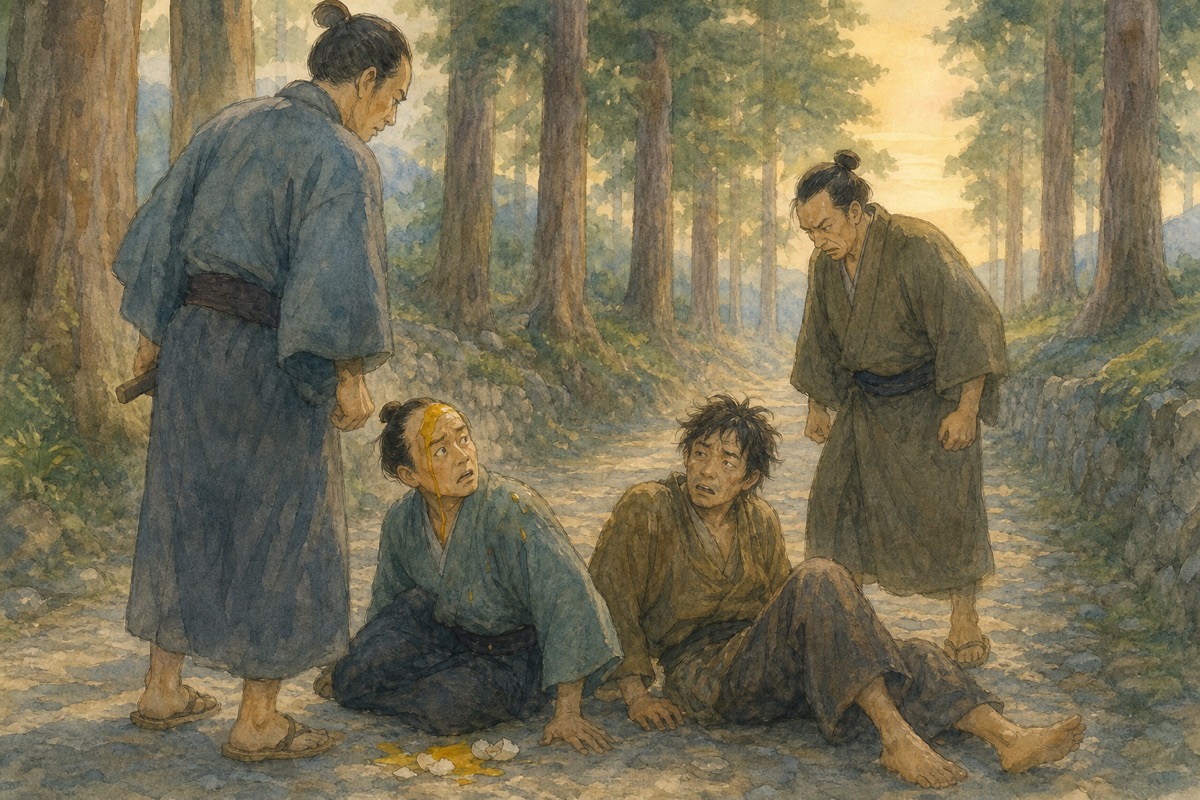
We asked the innkeeper to leave the door unlocked at midnight. We paced and paced in the room. At dawn, they came out. We followed. On the narrow road between cedars, we tripped them, one each. The Clown stumbled, and I stood in front of him. Hedgehog said: 'What is a head teacher doing out all night at an inn?' Redshirt said calmly: 'Is there a rule against it?' 'You who say others shouldn't eat noodles and rice balls, go yourself to singing girls,' said Hedgehog. The Clown pointed somewhere in the air and got stuck in his own lies. I felt the eggs in my pocket. I took out two and smashed them on his face. The yolk ran from his nose. He screamed like a chicken. I threw the rest like a small storm, and he cowered.
While I bombarded the Clown, Hedgehog beat words into Redshirt with his fists. 'Proof,' said Redshirt again and again. Hedgehog said the singing girl's name. Redshirt said he had been sitting with a certain 'Professor Yoshikawa' last night. As if that were better. Hedgehog gave him the answer that men understand when ears won't. In the end, the two sat squatting against a cedar, with yellow and dusty eyes. 'This is punishment for hypocrisy,' we said. 'We won't hide. We'll be at Minato-ya, by the beach, until five o'clock. Send the police if you want.' We left and packed.
I paid the Haginos and told the old woman I was going to Tokyo to fetch my 'wife.' Her voice warmed, as old women's voices do, and she wished me a good journey. I sent a simple resignation to Badger: 'Personal reasons. I am returning home.' No police came. We set sail that night. The farther we got from the coast, the lighter my chest became.
From Kobe, we took the train all the way. At Shimbashi station in Tokyo, we stood in the white morning. We didn't say 'good luck,' we didn't say 'see you.' We nodded. Each his own way. I haven't seen Hedgehog since.
I went straight to Kiyo before finding a guest room. 'I'm back,' I said. She cried and laughed and said it was good I came so soon. 'The countryside is not for me,' I said. 'Now we'll keep house here in Tokyo, you and I.' Later, I got a job as an assistant at the streetcar office. Twenty-five yen a month, six and a half for rent. The house had no big gate. But Kiyo was satisfied. She asked about my colleagues as if I had been on a family visit. I told her what I could and kept the smell of hypocrisy outside her door.
In February, Kiyo caught pneumonia. The day before she died, she called me to her bed and whispered: 'Bury me at our temple. I will wait for you there.' So now she lies at Yogen Temple in Kobinata.
If the country down south taught me how cheap hypocrisy is, and how smoothly some can wipe away stains with fine words, then Kiyo's life and death taught me what lasts. People may call you reckless, useless, brash. They paint their faces with 'culture' and 'refinement' and call it virtue. But one old woman who dries money she fished out to save you shame, because she believes in you. One friend who shows his anger in daylight and takes his punishment when it's deserved. Such people become a straight rope you can hold onto.
I am no saint. I killed a fish because I couldn't bear it wriggling on the hook. I threw raw eggs in the face of a fool and struck a hypocrite on a road between trees. I ate four bowls of noodles and swam where a 'forbidden' sign hung. I lay awake while the floor pounded 'one-two-three-whee' above me and mosquitoes bit my whole face. I spoke clumsily when truth needed sharper words and borrowed courage from a man from Aizu to get them out. I said no to more salary not because the rules said so, but because the money smelled bad.
If the boys I taught remember anything, it's not the equations. It's maybe just that a teacher with a red towel taught them that mockery without courage only makes the world smaller. That a school can become like a restaurant when a principal doesn't dare say what is right and wrong. That a man can be moved like a jar from shelf to shelf just because he doesn't bow.
The last I saw of Koga, he bowed deeply and thanked the same people who sent him away. The last I saw of Redshirt, he sat crouched with dust and egg yolk on his face, while the spines of truth stuck where his words didn't reach. The last I saw of Hedgehog, it was morning over Shimbashi. We each went our way. Without promises. Without regret.
Kiyo waits where the ground is still. She believed that one day I would live behind a big gate and drive my own rickshaw. My house has no such gate. But if she were here, she would count the clang of the streetcar, not the rent, and call me a great man anyway. Maybe her gates and rickshaws were the name she gave a life without double talk. Maybe she saw in me not a destiny, but a straight back that won't be rubbed soft by people who call noodles vulgar and Kadoya culture. I don't know. I only know that when I am most alone, I still hear her voice at the foot of my bed on a winter night. She sets down a bowl of warm noodles and says: 'Eat. You will become a great man.' The rest of my life is nothing more and nothing less than repaying that debt.