Age-adapted BokRobot book
Sult for age 10
Sult
Hamsun, Knut
16 pages · 5,013 words Norwegian
 English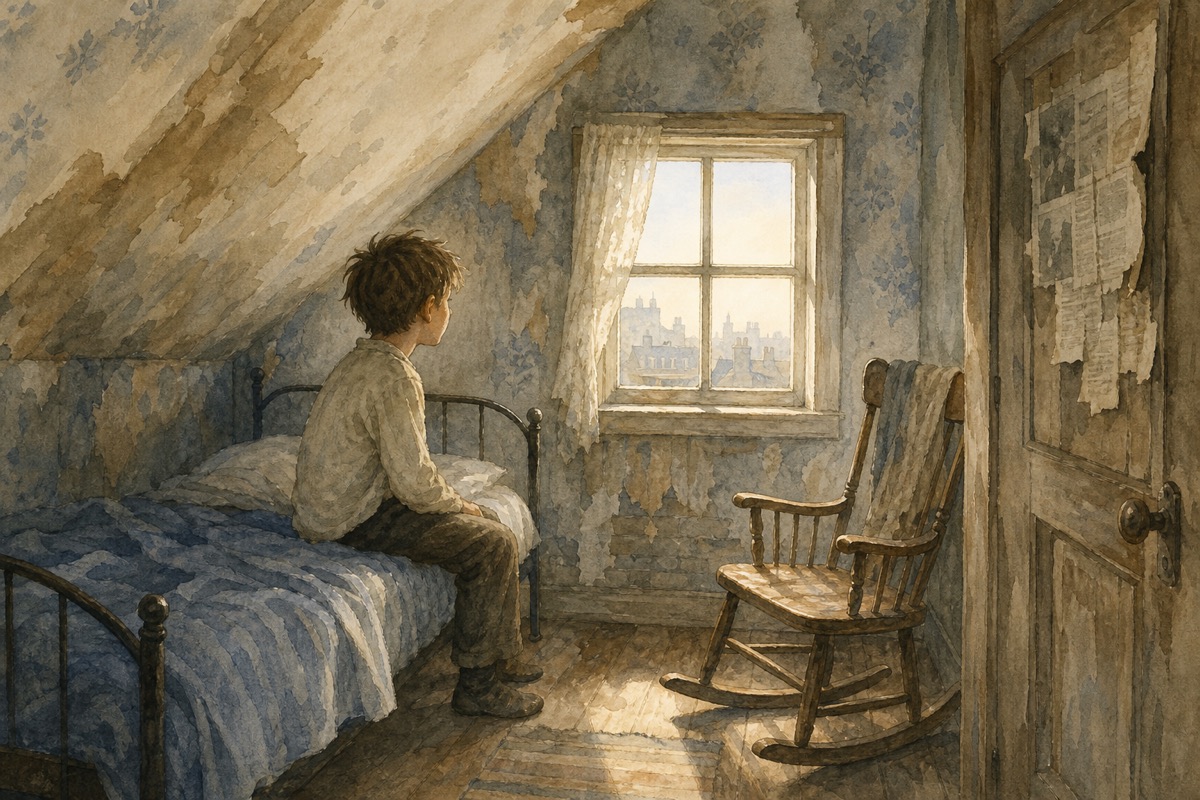
I lived in an old house in Christiania, in a room so small that my rocking chair bumped the bed when I breathed. I had no clock, so the church bells told me the time. Newspaper clippings were pasted on my door, telling of bread prices and funerals. I knew them by heart. When I woke up, my body felt light, as if I could fly. But soon I remembered: my stomach was empty. Hunger made my mind clear. I thought: today I will write something so true that I can buy bread for it. I believed it. I walked past butcher shops with red meat hanging, and bakeries where the smell called to my belly. I walked to escape my landlady's knocking. I lived on pride and hunger, and on one hope: that the right words could become coins. Some hours I wrote as if a hand inside my head dictated. Then I would read what I wrote and think it stank of boasting. Every time I got near an editor's door, it felt like a hinge between mercy and punishment. A small 'yes' would give me coins and a warm glow in my chest. The next day, my pride might ruin everything, and I would give away what little I had, or tell a new and foolish lie.
One night a policeman stopped me for loitering. He thought I was a tramp. I forced a cold smile and said the name of an important acquaintance: Happolati. The policeman nodded and left. An hour later, that name burned on my skin. I learned that words could save or destroy me off paper as well as on it. Often I searched my coat for a coin and found only thread. Sometimes I sold buttons to get a piece of bread. I ate too fast and too seldom, and shame tasted stronger than sugar. Once I gave my last coin to a ragged man, not out of pure kindness, but out of wild pride: better to be broke than to look broke. At night I trembled with anxiety over what I had done, hating and loving my own theatrical righteousness. Yet there were days when the city looked new. Then I ran through the streets like a boy, catching small images: a dog slipping, a whip cracking, a lady with a tooth sticking out like a little finger. Such things kept me going a little longer.
One morning a very old man limped ahead of me with a bundle. My pity ran after him. He asked for milk money, and I had nothing. I ran to the pawnbroker, sold my vest for a krone and a half, came back with a coin and pressed it into his hand. Then he stared at my torn knees and coat, and I blushed with rage. I couldn't bear that a needy man looked at me as needy. With the half-krone left, I bought bread and cheese and sat in a park. There I calmed down. I told myself: forget small things, write something big! Not 'The Crimes of the Future', but something that could stand against the great thinkers and give me more than my landlady's book. I grabbed my pencil – and found it missing. The little stub was left in my vest that I had just pawned. I paced hard in the gravel, as if I could put the world in order just by shaking it, and hurried to get it back. On the way, two young ladies passed, light in their steps, low in their voices. I brushed the sleeve of one, and saw a blush rise like a sun in her face. A strange wish sprang up: to mean something. I whispered a name I invented: Ylajali. I stood before her and calmly said she was about to drop a book. They felt their pockets. No book. I said it again, and felt ashamed as I said it. They disappeared into a music store, came out, and walked on. I followed them to St. Olav's Square No. 2, promised myself to stop, to do one good thing: stand guard like a dog until she was safely inside. A window opened. A face in the frame. We looked at each other a long time without words. She vanished from the sill. Her shoulder said something I didn't know if it was 'hello' or 'goodbye'. I walked on, pierced by a joy I hardly recognized. It was like the twin of hunger.
At the pawnbroker's, I made up a story to hold my head high: This pencil had written my great treatise. The man nodded, as if world history were a trifle, and I went out into the street with warm cheeks. In the park I met a little old man with a folded newspaper package. I was hungry for play, offered him a cigarette I didn't have, and when he asked for an address, I boldly said: St. Olav's Square No. 2. Who lives there? Happolati. And suddenly Happolati got feathers from Russia and berries from China, an electric hymn book with glowing letters, a service in Persia and a daughter who slept on yellow roses. The little man didn't doubt a word. That made me furious. I chased him away with words I deserved myself. Toward evening, as baby carriages rolled and a clarinet made the air thin, I tried to write. My hand only wrote '1848' in every corner, as if that year was stuck in me. I saw an ad for an evening bookkeeper far away and decided: I'll take the job, no matter the pay. At home, a note from my landlady waited: prepayment or leave. I wrote my application, calm and neat, though my stomach sang. Before dawn, words finally came by themselves. I wrote and wrote, and everything felt complete. Ten kroner would be too little, I told myself. This was life. I wrapped my blanket into a bundle, carried my manuscript to the newspaper, and begged that it go straight to the editor's hand. No bed would have me that night, so I walked out of town and slept under stars that roared like a blue sea. The rolled blanket was my pillow, and I heard the wheels of the world sing.
The next day I came home soaked and shivering. At Grønlandsleiret I was to get the bookkeeper job. The merchant took out my application. I had written the wrong year: 1848. 'We need someone who can handle numbers,' he said. The job was gone. I ran out, bumped shoulders, lied at a random door about being a fine gentleman, and hated myself for the shape I was in. In the evening I slept at the town hall, registered as homeless with the name Andreas Tangen and occupation 'journalist'. A friendly officer showed me a quiet cell, as if he worked at a nice office. In the dark I invented the word 'kuboå' and defended it as if it were the cornerstone of a language. When meal tickets were handed out in the morning, I said no. A ticket would mark me. I went to the editorial office and bent as low as I could to hide my need. Assistants looked past me. I looked for a friend who used to have a coin I could borrow. He had gone home for the holidays. I teased a policeman with a paper cone that looked heavy as silver, laughed silently when it was empty, and when a hurdy-gurdy girl sang, I almost had to give her a vest I no longer owned. I broke off the buttons from my coat and dreamed of pawning them into coins. Finally I spoke with an editor. He was gentle: I always wrote too warmly. Could I keep a cooler head? He promised to read what I had submitted. I couldn't ask for a krone. Instead, I ran to punish myself, from street to street, and decided, with no other hope left, to visit Pastor Levion. I arrived too late for his 'hours', and the speech I had rehearsed crumbled in my mouth. For a second I just wanted to lie down quietly in my bed and stop trying. I carried my blanket to the pawnbroker, offered first my glasses, then the blanket. He shook his head. At home I spread the blanket out again, laid it solemnly, like a flag over the bed. It had only been a weak moment, I said. I could manage one more day.
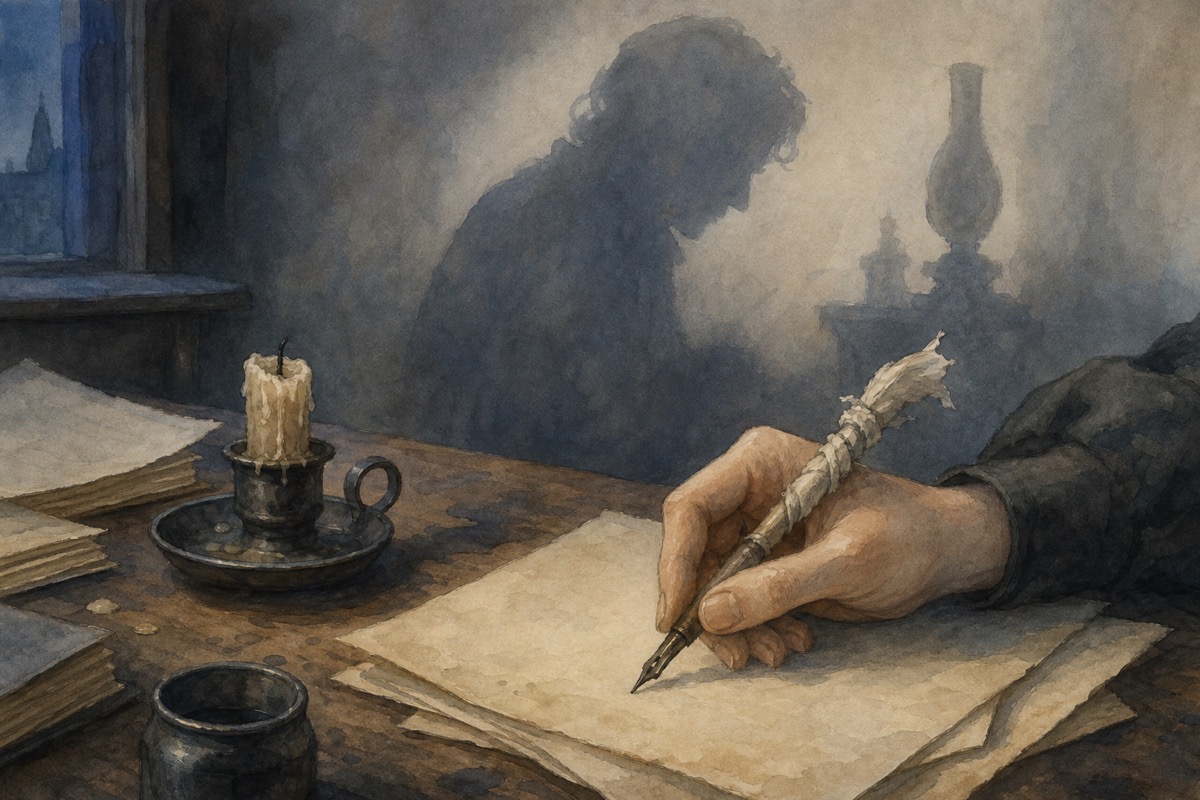
The day became slivers and a small stone I sucked for moisture. The skin on my face was thin over the bones. A girl looked down from a window, startled at my face, and said loudly: 'God help me, what a face!' I became furious without having the strength for it. A doctor I knew, polished as a duke in his manners, kindly said I should let myself be arrested. No, I thought. Not darkness and locked door again. I begged for five øre in a yarn shop. The clerk showed me his empty pockets one by one and calmly said he didn't steal. Three times the pawnbroker waved me away. Finally I met an acquaintance who saw the buttons in my hand, swore, dragged me down the stairs, and for his own sake forced the pawn through. Money. The brick in my stomach settled. A bright week followed. I ate, and the storm inside me subsided. I wrote three or four pieces at once, as if filling a basin that had been empty. One came back and went into the stove in a flash of pride. I would try another newspaper, and if not that, a ship. The nun was ready for the sea. I could sign on as anything. But hunger had left its marks. My hair came out in small tufts, morning light trembled in me, and my fingertips burned. I wrote with rags tied around my fingers. At an editor I had admired as a boy, I presented a piece about the painter Correggio. The room smelled of glue and seriousness. He put down his pen, asked for the date, said his readers needed something simpler. Could I rewrite it? Or deliver something else? He even offered an advance. I said no. Not just out of pride, but because he was decent, and I wanted to be worthy. I promised to bring something that made ten kroner a given.
Every evening, exactly at eight, when I walked out the gate, a lady in black stood under the gas lamp. A small parasol handle of ivory. A veil. A stillness that seemed placed there. I thought she stood there for me, but I didn't dare find out. I needed light to write. One evening I asked the merchant for a candle. In the confusion, he turned to a lady at the counter for small change, then counted out coins into my hand as if I had paid with a five-krone note I never had, and finally handed me the candle as well. I walked out slowly, the coins warm in my palm. I went into a basement restaurant, ordered beefsteak, and the waitress, seeing my thin jacket, gently asked if she could offer a glass. I paid her instead. The steak rose like a fist in me; I had to go out and throw up, and asked a stranger what someone who had been hungry a long time should eat. 'Boiled milk,' he said, surprised. I drank it way too hot. Outside the gate, the lady in black was there again. I stopped. My name for her had become a little breath: Ylajali. 'Are you looking for someone,' I asked, 'or can I help?' 'No,' she said, 'I'm just standing here.' She asked me to walk with her a bit up Karl Johan. The square at home scared her in the dark. We walked, and her warmth went through the fabric. We talked about her mother who was hard of hearing, and a sister who had left. I offered stories about wild animals in menageries and thought to myself that I would have liked two kroner for something nice. A working girl passed by and called me a 'dried fish' when she found my pockets empty. She offered anyway, and I said no. Afterward I trembled a little and thought I had saved something, maybe her, maybe myself.
In the morning snow fell like small scratches in the air, and joy made me dizzy in a good way. I tried beef again, but my body said no. I bargained for a used garment at a market but was instead dragged for beer by an acquaintance who talked as if bills were the only thing in the world. My shame was kindled by the beer. I went to the cake lady by the Elephant Pharmacy and placed in her hands the money I had actually received by mistake from the merchant. The relief was so great it was like a key turned in me. I hailed a cab like a prince, shouted addresses I invented, carried two suitcases into a stranger's hallway, laughed silently at my own antics, and went out again with an empty head. By a church grating in Grønland, I looked at my thin hands and a red sore on my belly where my shirt had rubbed my skin raw. I wished everything was over, but I still went back to the merchant and told him exactly how I had gotten the five kroner. Where I stood, where he stood. He became afraid for his position and begged me to be quiet. I felt big for a moment and then ashamed. Then came the fever. The world burned in my head; animals and people were sparks. When hunger returned, it was like small, private animals chewing sideways in my stomach. A bread cart rolled over my toes and tore my shoe; people stared at the blood, and I didn't ask for a loaf. I went to the meat market, called up to an invisible dog and asked for a bone. In a dark back alley I gnawed tendons, threw up, tried again, and threw up once more. I threw the bone away and said aloud to the sky that I would rather be in its strictest kitchen than be so stupid and empty.
Down by the harbor sat a lame man looking at me with a watchful one-eyed gaze and shared a little tobacco. Suddenly the Commander, the editor with glue and seriousness in his room, stood there on the quay. 'Have you eaten?' he asked, looking me straight in the face. 'No.' 'Don't starve yourself to death,' he said, and pressed ten kroner into my hand. I couldn't get my thanks out fast enough. The next day, by St. Olav's Square, I hid in the shadows and watched the windows of number 2. She came from the opposite direction, slightly out of breath. Her mother had gone away for an hour, and the house was empty. 'Can I come in?' I asked. 'Not through the door,' she said quietly, 'not there.' She took my hand in hers. She lit a candle. We played around the chairs with small laughs like when one is both scared and happy, and I fell clumsily and hit my foot which was already sore. She laughed, but kindly. We sat close. I told her why I had called her Ylajali: because the sound slipped like a sigh. We exchanged names. I said I was poor, and told her awkwardly about the money at the merchant's – that I had paid it back. Her eyes widened and she whispered 'God save me,' but she didn't pull away. When I became too eager, she stopped my hand. For a moment, the air seemed to stand still. Then she got up and lit the candle again. The clock ticked. At the door I talked too long, about small signs I thought I could read in people, because I myself had wounds I knew so well. She stood still and whispered 'God, forgive me' to the stove. I suddenly realized how silly I sounded. When I finally left, she came close and put her arms around my neck. She held me that way, her breath warm against my cheek. I was almost sure she whispered that she liked me. I walked backward out, said she was beautiful now, and closed her door with a thump in my heart.
Winter fell like a wet veil, and I moved to Vaterland. Once, the family in the house had lent me their best room when I had good days; now I got to sleep on a mat in the hallway. I wrote every day at the window when I could borrow it: a story about a bookstore that burned, not just paper, but thoughts in bright flames, like a great night of burning heads. The more I worked, the more smoothly the gift slipped out of reach. The landlady asked me to keep her accounts. I came to the line '3 5/16 pounds cheese at 16' and went blank. It was strange: I had seen at first glance that the lady was pregnant, without being told, but 5/16 cheese was too much for my head. Outside the children were noisy, a girl with blue hands slid on a mattress from a moving cart, a boy had his ears pulled, and the landlady yelled that he should shut up. I told my own reflection that all men can stumble over a poor man's cheese. Then I laughed and coughed and said: give me 5/16 fine butter instead! One morning such a luck came that I was sure I could finish. Then the door flew open. The landlady said she had gotten a lodger who paid for the room. I could sleep downstairs with the family, or in the corridor. She gathered my pages and handed them to me in a random pile.
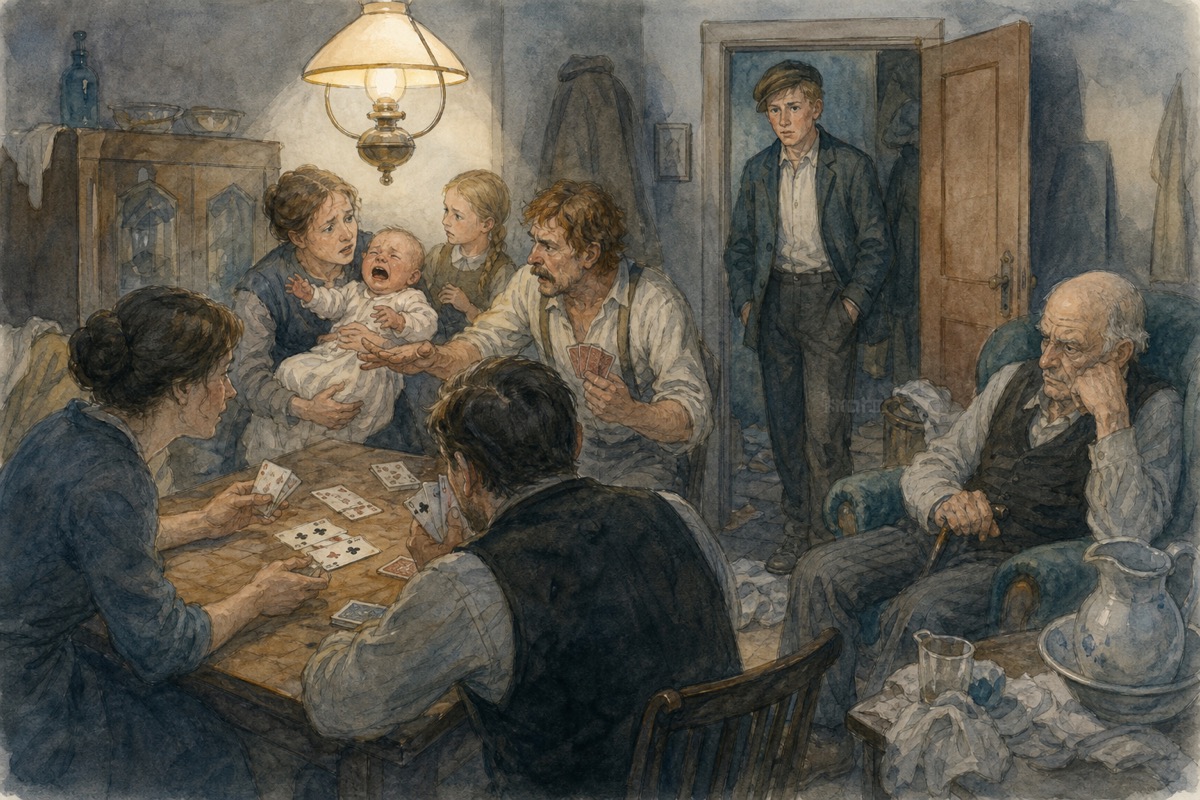
Downstairs lived the husband, the wife, the old father with white bent hair, four children, and the maid who slept in the kitchen. The man played cards with a dockworker every free hour. The landlady ran the house, found lodgers, made deals at the wharf, kept all the screws in place. The new lodger upstairs was a sailor studying for his mate's exam. The room did not come back to me. In the hallway I started anew: a one-act play from the Middle Ages, The Sign of the Cross, about a woman at war with heaven – not because she was evil, but because she was wounded. She was tall and thin and sharp at the edges, like a chosen body for a hard thought. I wrote for two hours in a narrow happiness. Then it got cold and the baby cried, and everything stiffened. I went out. On Karl Johan I met the Maid, a frivolous acquaintance. She cheerfully asked if I hadn't messed up the books at the merchant's. I said nothing. It struck my honor like a nail under my shoe. Then, to make it all worse, a red dress came down the street with my clean-shaven doctor friend beside it. A slow pain slid through my chest. I said nothing again and promised myself I would become indifferent. Anyway, I would finish the play in one night, and then everyone would see what it cost not to believe in me. At home I asked for a lamp. 'No,' said the landlady, 'not until after midnight.' The maid laughed and read aloud old pages I had set aside. She mimicked my quiet chewing over palaces and laughed at my flat shoe and my hair in the washbasin. I didn't even ask her for a glass. I nested my own mat and told myself that silence was my last coin. The little girls stuck straws in the old man's ears. He spat in one of their faces and missed the other. The man slammed cards on the table and roared. I said carefully that the old man had no peace. The man turned and told me to shut up. The landlady shouted that she couldn't feed this lot and tolerate the end of the world in her living room. Finally the man said that you couldn't throw a man out in the dark. Whether that was true or not, it silenced everything. She pushed two slices of bread toward me. I said no, out of gratitude that had no place. In the hallway she
whispered that this was the last night. I nodded.
Before daybreak I managed to slip out of the house and walk through a city where only policemen and lamplighters were awake. I slept a little on a bench and woke to a white sky over the hills and began to cry without knowing why except for the simple light. When a stranger asked what was wrong, I pulled away and hid my face. Down by the docks lay a Russian bark, Copégoro, unloading coal. Chains clanked, dust glittered, boots on deck beat like drums. I tried to find the tune of my play again, but the noise chased the sentences away. Shame at returning without anything finished drove me back to the house to politely ask for an extension on my debt. In the hallway, the landlord waved me to the keyhole. Inside, under the oil print of Christ with green hair, lay the landlady with the sailor. On the opposite wall, in my bed, sat the old father upright, watching. The landlord shook with stifled laughter, as if it were a good story he was telling. Everything inside me that had been held up with sticks fell. I sat at the window and tried to be deaf. Across the street, a red-bearded man went to his window and spat on a little boy playing with paper strips. The boy jumped back and cursed vehemently. Again and again. I looked away to keep from crying. I lifted my pen into the church bells of my play and heard shoes on the stairs. The door opened. The landlady and the sailor stood there. She said I was a scandal, sneaking about. The sailor said I should be left alone, but she slammed the door, threatened me with the police. I went out and bit my tongue, better that than to thank for kindness I hadn't asked for.
Outside in the backyard, a porter found me with a letter. I tore it open, and a ten-krone note fell into my hand. 'From a lady,' he said. I crumpled the note and stuffed it back into the envelope, made it into a ball, turned, and threw it in the landlady's face. Afterward, I pushed my body into a house wall on the square and stood half-bent, as rage rose and strength sank. I whispered incoherent oaths about a potato cart being cabbage and swore by the Father, Son, and Holy Ghost that it was true. When the lump inside me settled, I sat still on a step and admitted to myself that I had nothing to complain about except myself. A worse thought crept in: the letter came from a lady. I whispered 'Ylajali' into the dusk, like a guilt. I had decided to pass her without looking at her. Now I burned with shame that she pitied me. I tried to save something by sheer will: 'If I finish the play before five, maybe the theater director can talk to me. A paid job is a better ladder than alms.' I read from the start and lied to myself about a new wave. Then I broke. I bit the pencil in two, tore the pages into snow, threw my hat into the street and stomped it flat. I asked a constable for the time in the most solemn way I could. He said four. I said to myself that I would remember him for his exactness, like a hen who promises to remember the wind.
I also told myself that pride had starved me. I had thrown away gifts as soon as they were loose. I had scattered ten-krone notes to strangers as if I didn't know what I was doing. If I knew Ylajali, I thought, she didn't regret it. Maybe she cared for me, maybe quite dangerously much. At five o'clock, a little light went out in a draft, and the low hissing returned. Hunger woke up for real. I went to the cake lady by the Elephant Pharmacy. I didn't want to play any more comedies. I said that once I had given her a sum, and that now I came for cakes, first installment, she could skip the rest for now. She didn't seem to understand. I grabbed a loaf and bit it. She put her hands protectively over her wares, as if I were stabbing them with a knife. I threatened to call the police, promised never to come back, took four or five cakes. When she grumbled and put out a few more to get rid of me, I counted aloud how much she was stealing from me, so I wouldn't have to hear how much I was stealing from her. I walked away, eating and talking aloud to myself, and hid one little cake, the one meant for the boy who had been spat on. I left it at his door in Vognmandsgaden, knocked hard, and ran. By the harbor, small wild wishes came: to shout 'fire' and see flames, to let go a mooring. I sat on a crate and looked at Copégoro. I called out, without a plan, and asked if they were sailing tonight. In Swedish a man answered that they were leaving soon. 'Did they need a man?' 'Maybe a deckhand.' A deckhand was a door. I took off my glasses and put them in my pocket, walked up the gangplank and said I was no sailor, but I could work. 'Where to?' 'Ballast to Leeds, then coal to Cádiz.' 'Fine,' I said. It didn't matter where the ship pointed. The man looked at me as if a gust of wind stood where a steady breeze should be, and said they could try me if I could stand it. If not, we could part in England. 'Naturally,' I said, flayed by relief. 'If it doesn't work, we can part in England.'
I did what I was told. As the fjord opened like a slate sheet under the city, I looked back at all the windows glowing like a beehive on fire, and said farewell for now. The city had given me hunger for breakfast and supper, and taught me strange things. I had crossed out and erased my own lines many times. I had been able to lie big to a policeman and then wear myself out with shame afterward. I had refused a meal ticket out of fear of being measured, and then begged for a bone for a dog that mostly existed in my throat. I had kissed a nonsense word in a cell, and later denied that same word. I had hoped that a sentence would become a coin, and stood silent when the coin was held out. I had seen men spit on a child and the child answer, and felt that the world could be small and ugly and sometimes large and gentle. I had met kindness that had no calculation: a constable who set my hat straight and whispered 'fool', a guard who said good night like a minister, the Commander who gave me ten kroner without a question. I had invented Happolati and filled a name with feathers and light, and then met Ylajali, reality and dream at once. I had learned a little about how hunger sharpens the senses and bends the back, how pride can be a sword and a cork, and how joy and shame can live in the same pocket. Now I held a different tool than the pen: rope, deck, bell. The sea's work has a strange fruit: movement. The city's pale face, the great indifferent sky, the doors that opened and didn't, the gaslight where a lady could stand for a week waiting for me to turn around – all slid backward as the ship pushed out. Hunger might well follow me. Words too. They would fight each other and both bleed a little. But the water's mirror grew wider, and with it came a simple clarity, not joy and not emptiness either: a will to do the work ahead of me, until a bell far from any writing desk rang once and said: 'Change the watch.'