Age-adapted BokRobot book
The Idiot for age 10
The Idiot
Fyodor Dostoyevsky
24 pages · 2,304 words English
 Norwegian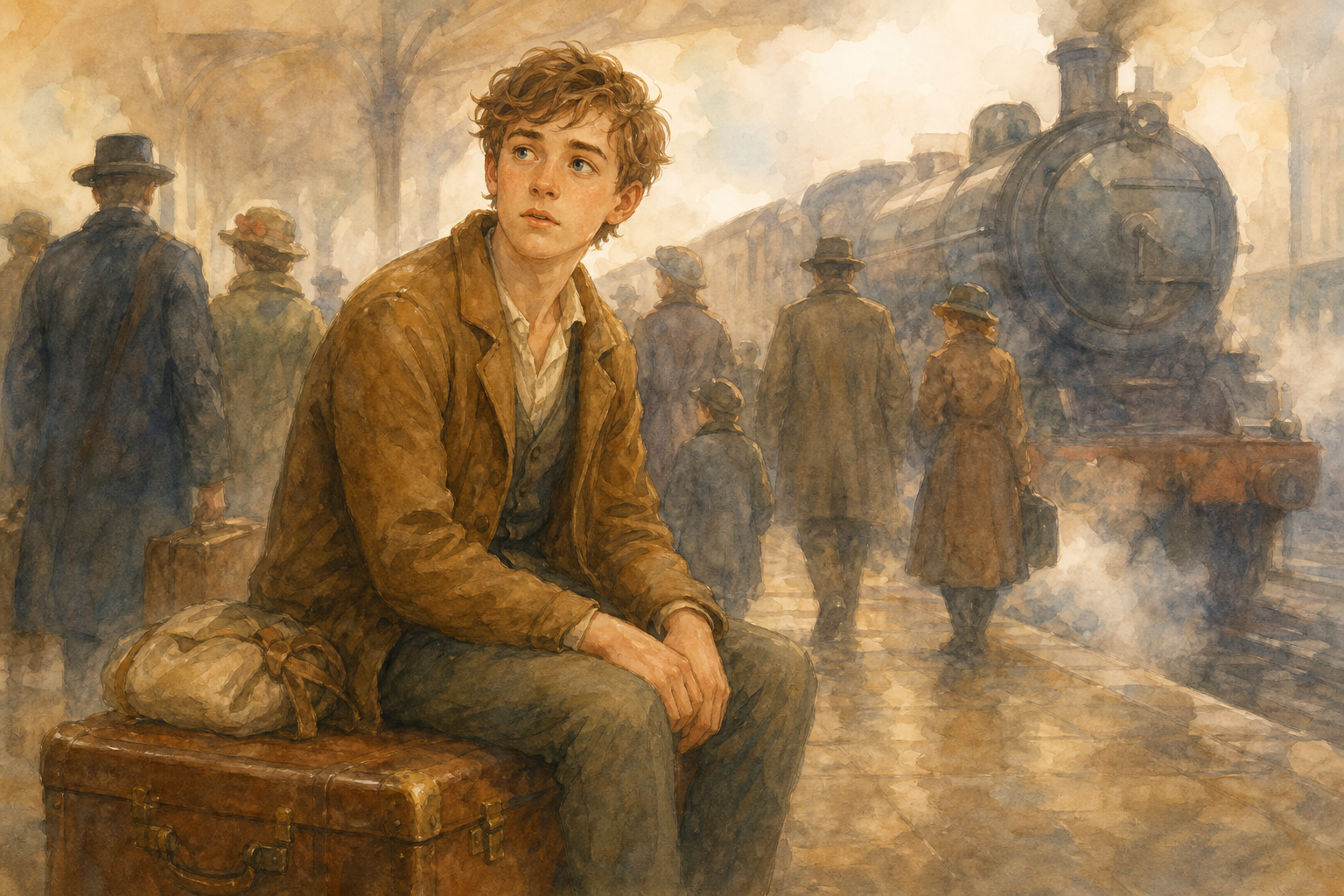
This is a story about a very special prince. His name was Lev Nikolayevich, but almost everyone just called him the prince. He was kind and always told the truth, even when others thought it was strange. Some thought he was stupid, but really he saw things that others didn’t. He had been sick and lived for a long time in Switzerland with a kind doctor. Now he was back in Russia, and everything was going to be different. The train had roared into the station, and the prince was the last to get off. He looked around with wonder. Everything reminded him of something, but he didn’t quite know what. People rushed by, but the prince stood still and breathed in the cold, smoky air. Home, he thought. Finally home.
The prince soon met three people who would change his life. Nastasya was beautiful, but carried a heavy secret. Aglaya was proud and brave, and wanted to decide her own life. Rogozhin was a dark man who loved so hard that everything else disappeared. And then there was Hippolyte, a young boy who was dying and didn’t want to wait for death. They all met one sunny afternoon in a garden full of lilacs. The prince immediately felt that these four were different. Something in their eyes said they carried secrets bigger than words.
Hippolyte put an explanation on the table. He had been sick for a long time and knew he would die soon. He didn’t want others to decide for him. He had thought about it for a long time, not in anger, but as a hard, clear idea. He wrote that maybe the pursuit of happiness is more important than happiness itself. And that some thoughts are so big they can’t be said with words. The room fell silent as he read. The prince looked at him and understood more than he could say. Sometimes wanting to die is a way of saying you can’t live the way you want.
Hippolyte told about a time he found a wallet on the street. It belonged to a young doctor who was very poor. Hippolyte gave it back, and the doctor was so grateful. Together they went to a rich uncle who helped the doctor. Hippolyte felt good. He thought that a good deed can spread like ripples in water, farther than you know. He smiled weakly as he told it, but there was something sad in his smile. Maybe because he knew he would never get to do enough good deeds.
Later that same evening, Hippolyte stood on a bridge talking to his uncle. “And you will soon leave us,” said the uncle. Hippolyte laughed, but inside he felt fear. Suddenly he realized that his thoughts were running faster than he could walk. Soon after came the big decision. It came from many small things, and one thing that almost didn’t fit with the rest: a painting at Rogozhin’s. It was as if the picture had lit a spark in him, a spark that burned stronger every second.
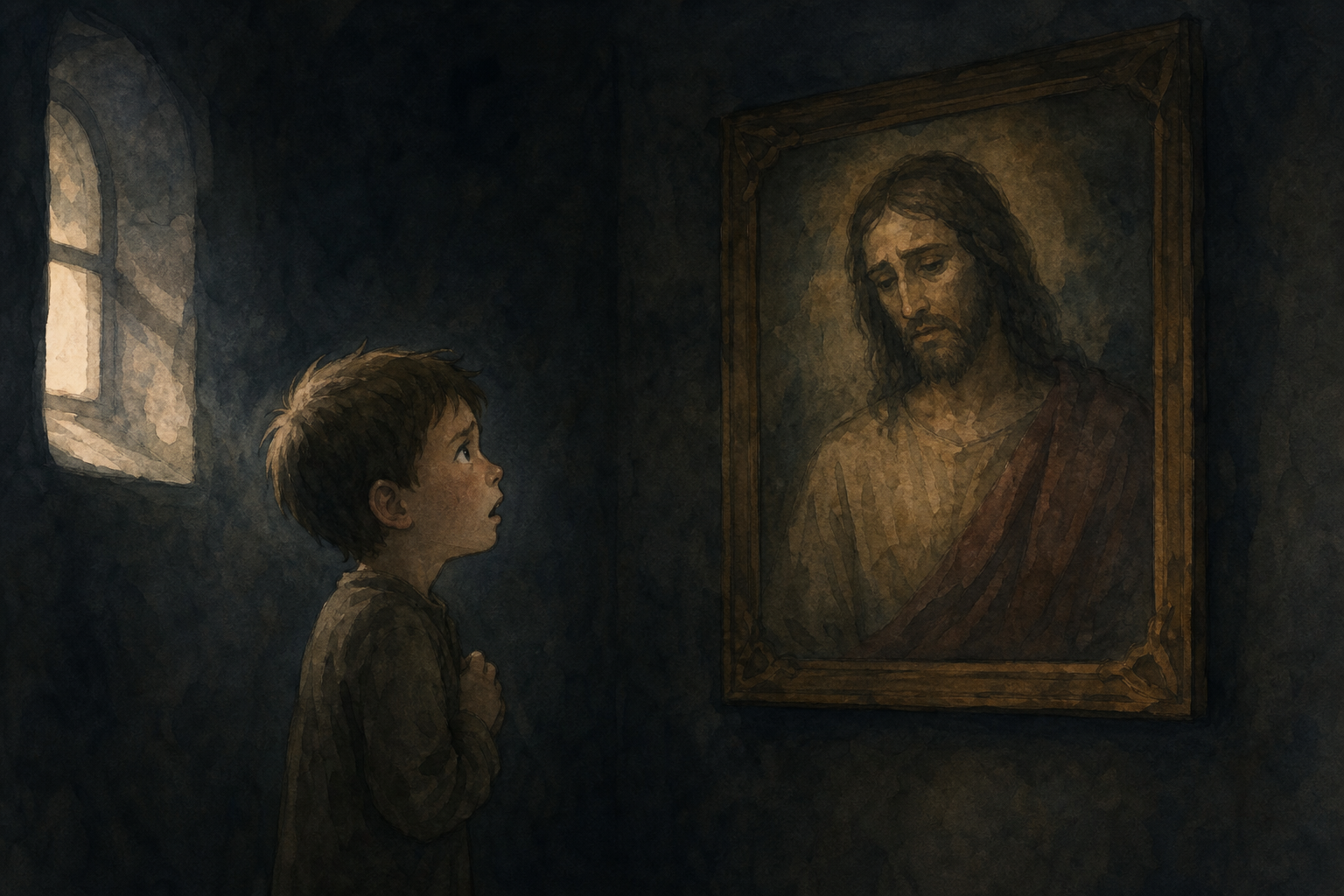
Rogozhin lived in a dark house. On the wall hung a painting of Jesus, taken down from the cross. It was not beautiful. The face was green and gray, and the body was heavy. Hippolyte stared and thought: How could anyone believe He rose again? The painting scared him. At night he dreamed of an ugly insect that laughed at him. The insect had many eyes, and all of them looked at Hippolyte without blinking. He woke up with a racing heart.
In the middle of the night, the door opened. There stood Rogozhin, silent and with hard eyes. They had not parted as friends. The silence was like a mockery. Hippolyte decided not to say anything until the other spoke. Rogozhin stood there for a while, then walked softly out and closed the door. The next morning, the door was locked from inside. Hippolyte felt that someone was playing with him. He clenched his fists. Why did everything have to be so complicated?
Hippolyte had an old revolver. He chose sunrise in Pavlovsk park, so the family wouldn’t have to find him. He wrote an explanation: “Why should I obey laws I don’t understand?” The night before sunrise, there were many guests at Lebedev’s. Hippolyte read what he had written. Some laughed, others got angry. The prince looked at him with eyes that said: I understand you. It was as if the prince looked right into his soul.
Finally Lebedev took command. “Give me the pistol, or I’ll call the police!” Everyone ran into the prince’s room. There lay the case. Hippolyte suddenly hugged the prince, as if saying goodbye to all of humanity. Then he ran out into the stairs. He held a glass against the bright sky. “The sun is rising!” he said and took the pistol. Keller threw himself forward to stop him. There was only a click. No shot. The silence was deafening.
Hippolyte collapsed in tears. “I forgot the cap,” he sobbed. Shame fell over everything like a heavy blanket. They carried him inside. Some said that boys like him would do anything just to be seen. The prince shook his head. He understood too well what a desperate heart can do when it’s chased. He sat next to Hippolyte and laid his hand on his shoulder. “You are not alone,” he said quietly.
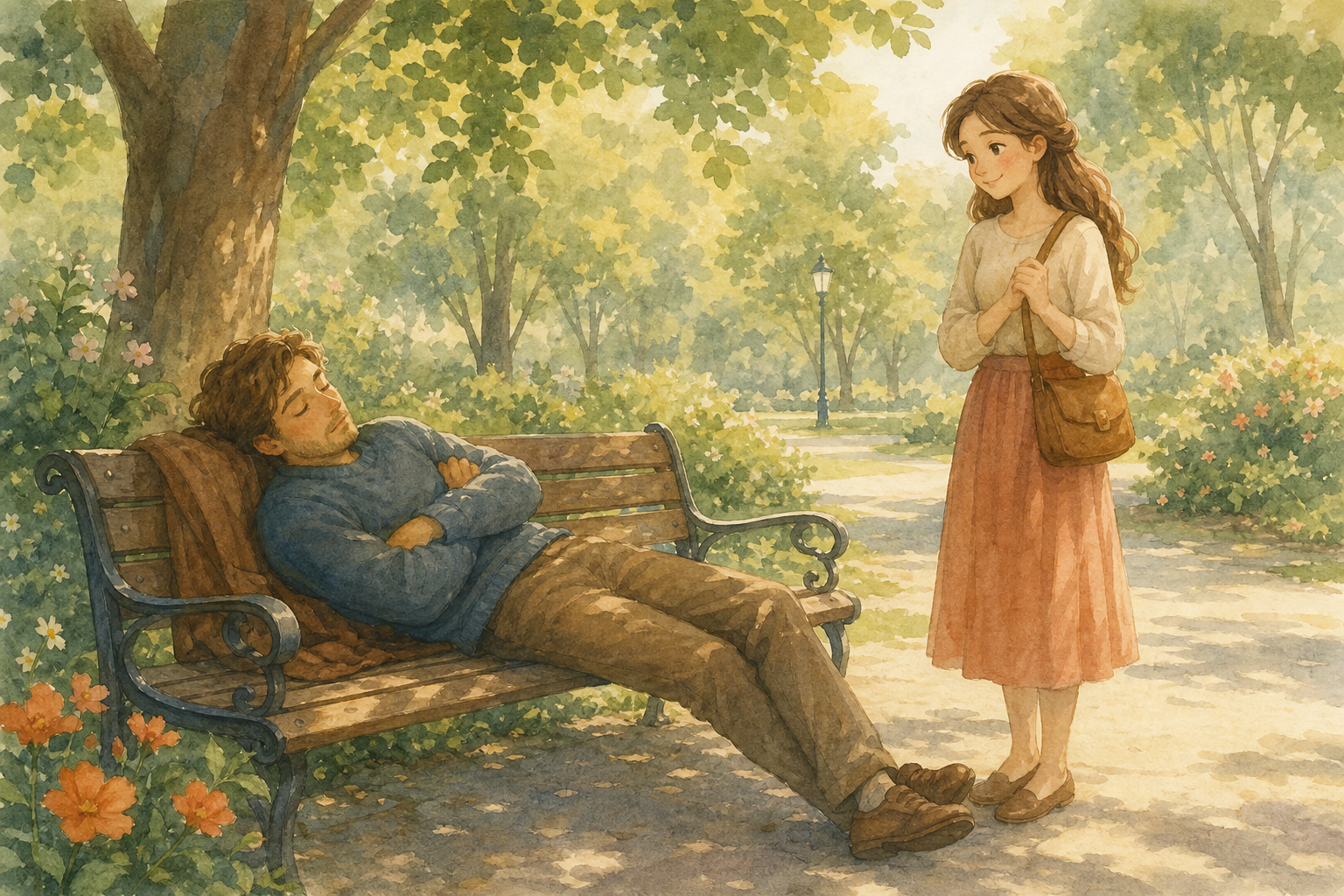
Later, the prince walked in the park. He recognized an old pain from Switzerland: that everything in nature sang together, but he couldn't find his place in the song. He fell asleep on a bench and dreamed of a woman who was both her and not her. Then he woke up to laughter. It was Aglaya. She stood before him with her hands on her hips. “You’re sleeping here?” she said and laughed. “You really are not like others, prince.”
“Tell me everything,” said Aglaya. “Everything that was said last night.” She was tired of everyone calling her a child. She wanted to travel, become a teacher, see Rome and Paris. Then she took out three letters. They were from Nastasya to her. In them it said that Aglaya must marry the prince. “She is jealous,” said Aglaya. “She would kill herself the day after our wedding.” The prince took the letters with trembling hands. He didn’t know what to say.
The next day, Lebedev brought new trouble. Four hundred rubles were missing. Suspicion fell on General Ivolgin. The prince asked everyone to be careful. Being wrong could destroy a whole person. Later it turned out that Lebedev himself had put the wallet there to set a trap. The prince was angry. “Give it all back and pretend nothing happened,” he said. “Such things are unworthy.” General Ivolgin looked at the prince with tears in his eyes. He had never met such generosity.
That same evening, the prince read Nastasya’s letters to Aglaya. Nastasya wrote that the prince was like light. She imagined Jesus alone in the twilight, with a little child at his knee. But under this light, there was darkness. She wrote of a razor hidden in silk, of a corpse under the floor, of eyes that watched her every day. The prince went into the park after reading. The moon shone coldly, and he felt empty. How could one woman carry so much pain?
On the way home, a figure jumped out before him. “Are you happy?” cried Nastasya. “Were you with her?” She kissed his hand with tears. Then she disappeared with Rogozhin. Rogozhin came back and asked: “Are you happy?” “No,” said the prince. Rogozhin laughed darkly: “I expected nothing else.” The prince stood alone in the dark and felt that the paths before him had narrowed. The choices he made would hurt someone.
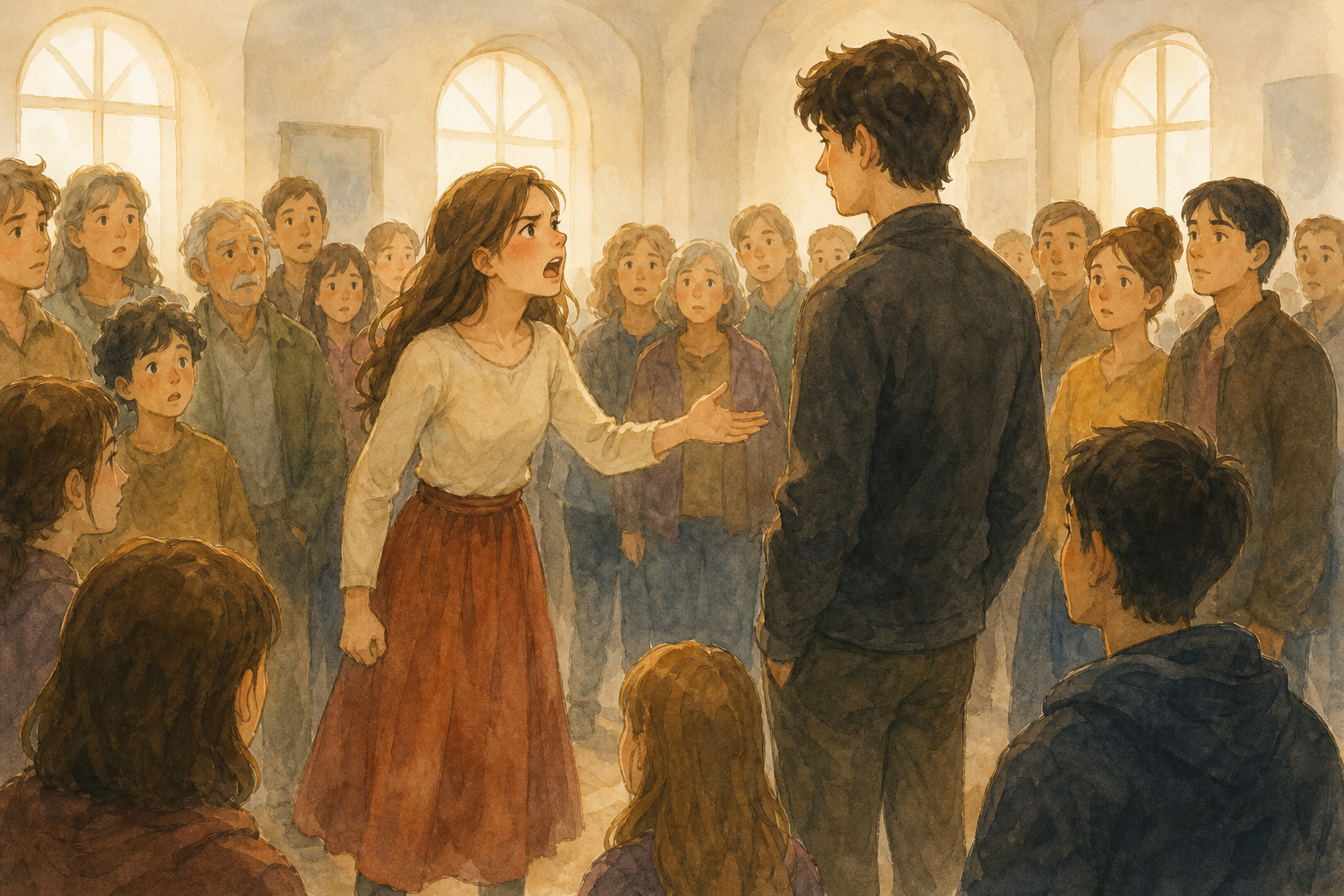
Rumors spread quickly. Soon people said the prince and Aglaya were engaged. One evening at the Yepanchin house, Aglaya came in and asked loudly: “Do you intend to ask for my hand?” “Yes,” said the prince. She asked about rank, money, title, and laughed shakily. Afterwards, she apologized for teasing. “No hard feelings,” she said, but her eyes said something else. The prince saw that she was scared. Scared of getting hurt.
At the Yepanchins’, the important names were to examine the possible fiancé. The prince knew it was a test. He washed his hands too long and promised himself not to break anything. A Chinese vase stood on a table. He looked at it like an enemy. During the party, he spoke about faith and church, and the room became stiff. And just then, as he swung his arm, he hit the vase. The sound of broken porcelain made everyone jump.
The prince had a seizure. Aglaya managed to catch him so he didn’t hit his head. Afterwards, everyone was friendly, as if nothing had happened. But underneath the friendliness, there was a string that said something else. Someone made a decision that evening. The next day, Hippolyte brought new news: Nastasya was at Daria Alexeyevna’s house. A meeting was arranged. The prince wrapped himself in his coat and went out into the rain. He knew this meeting would change everything.
Aglaya came herself and said, “You are ready.” They walked to the house. Rogozhin let them in. In the living room, in black, Nastasya stood waiting. Aglaya said that the prince thought he could make a woman happy who carried so much shame. That Nastasya didn’t love him, but loved her own shame. Nastasya answered quietly that Aglaya herself did nothing with her life. The voices rose and fell like waves, and the prince stood in the middle and knew he couldn’t stop them.
The prince begged them to stop. He begged for God’s sake. Rogozhin stopped smiling. Nastasya whispered that Aglaya had come without a governess. “Do you know why? Because you are afraid of me.” Aglaya whispered that the prince hated her. Nastasya burst out. “Take him then!” she cried. “He only looks at you!” Then she broke down and cried: “No! Mine!” She threw herself on the prince and held him tight.
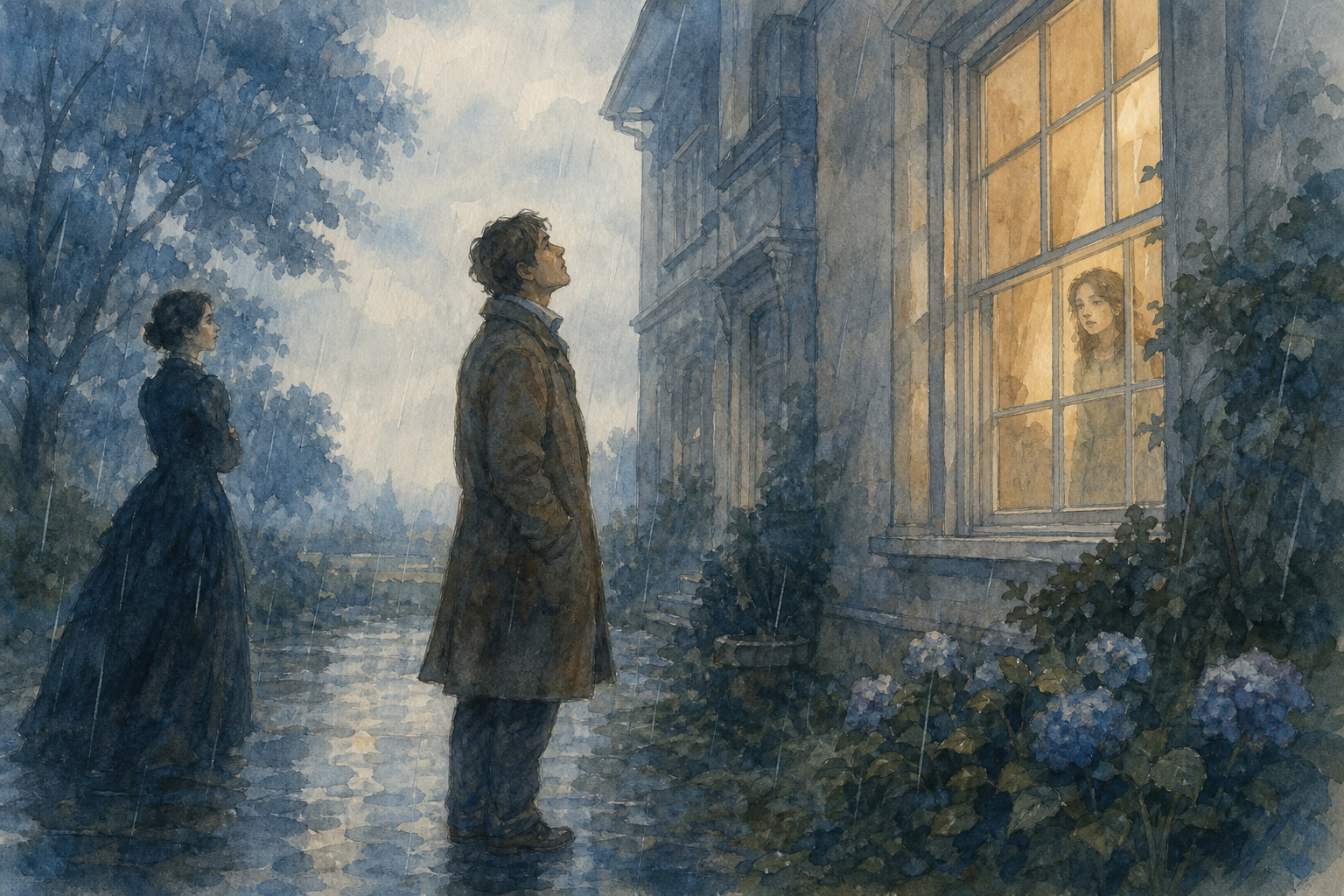
Aglaya fled. The prince ran after her, but Nastasya stopped him. She threw her arms around his neck. “Mine! Mine!” Rogozhin took his hat and left without a word. The city talked loudly: the prince was going to marry Nastasya. He had dishonored a fine family. The prince felt he was being pulled in two directions. He was with Nastasya comforting her, and he stood outside Aglaya’s house without daring to go in. The rain fell like tears from heaven.
The day of the wedding came. The church filled with guests. The prince waited. When the bride stepped out of the carriage in white, her eyes glittered as if on fire. But then she saw Rogozhin in the crowd. Everything changed in her. She threw herself toward him. “Save me! Take me away! Quick!” He lifted her into the carriage. “To the station!” he shouted. They disappeared in a cloud of dust. The prince stood alone.
The prince went to St. Petersburg to search. He knocked on doors, but no one knew anything. Finally, he met Rogozhin on the street. They went to the house on Gorohovaya Street. It was completely silent. Rogozhin locked the door behind them. Behind a green curtain lay Nastasya, still and white. “Was there much blood?” asked the prince. “Not more than half a spoon,” answered Rogozhin. The prince sat down beside him. Words were not enough.
When they broke the door from outside, the prince was still sitting beside Rogozhin. Rogozhin had brain fever. The prince didn’t recognize anyone. He was sent back to Switzerland, to the old doctor. There he sits quietly, and smiles when someone says his name. He is the same, and not the same. Some call him an idiot. Some call him a good person. Maybe both are ways of saying: We didn’t quite understand him.