Age-adapted BokRobot book
Plays: the Father; Countess Julie; the Outlaw; the Stronger for age 10
Strindberg, August
15 pages · 3,358 words English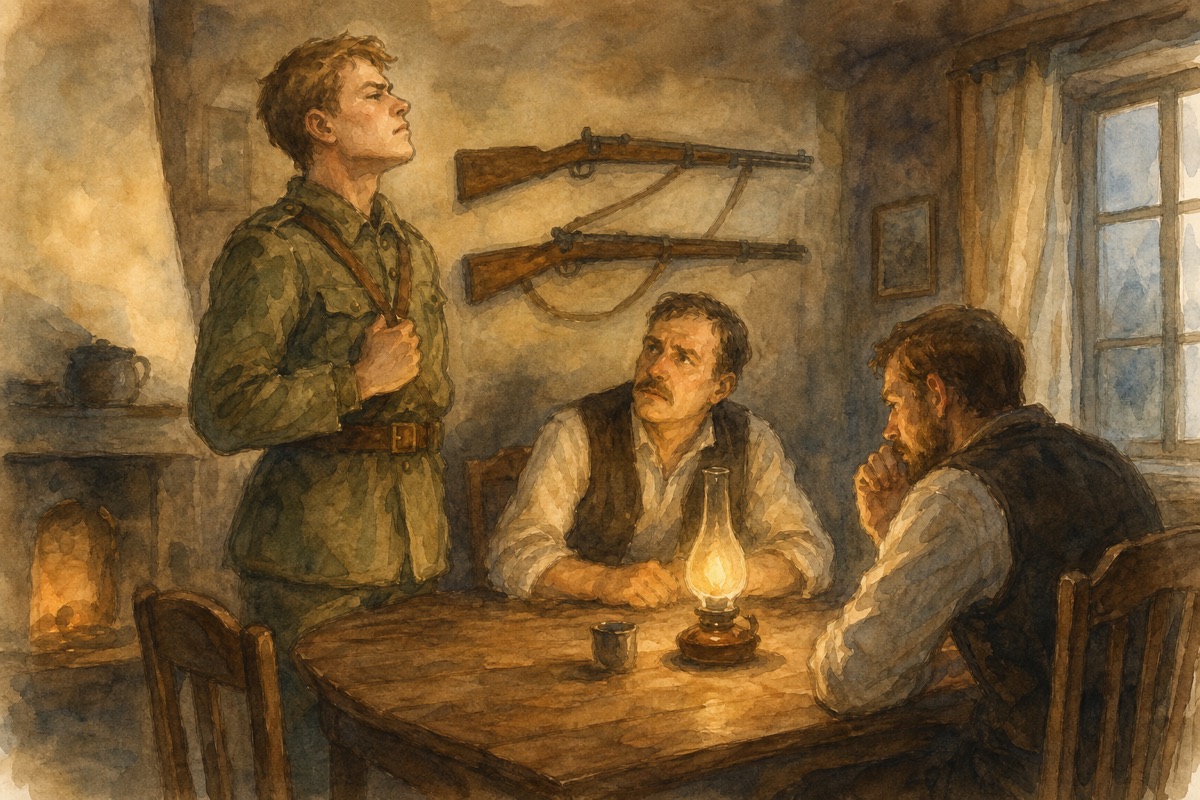
In the living room of a Captain, three men sit under a lamp. On the walls hang rifles and hunting trophies. The soldier Nöjd stands stubborn. He has made the maid Emma pregnant, but says he doesn't know for sure that he is the father. The Pastor sighs, the Captain's face grows warm. How can you not know? Nöjd answers dryly that no man can know for sure. A promise of marriage? Just words. It is as if the air changes color. The Pastor lets him go, but the sentence remains in the room and finds a corner in the Captain's head. When silence comes, the Captain suddenly hears other sounds: a child's laughter from another room, footsteps in the kitchen, a key turning in a hand. He thinks of his daughter Bertha. He wants to send her to the city to learn something practical and become strong in the head. He says it out loud to the Pastor: Bertha will go to the professor's school in two weeks. The Pastor nods but reminds him kindly of the Captain's wife. Laura has never stood up without getting what she wants. When she moves forward, no man remains standing. The Captain laughs briefly, but not for long. He does not like war in his own house, and yet that is exactly where the battle comes.
Laura enters with the account book and something cold in her gaze. She asks about the numbers, about why a tenant was placed against her will. They exchange words that seem small, but underneath lies something large and unresolved. The Captain thinks she and the women in the house bother him with talk of spirits, art, and Friday meetings. He wants peace and usefulness. Their real knot lies just under the language: Bertha's future. The Captain says it dryly: in two weeks she leaves. The law gives the father the right to upbringing. Laura answers softly, almost like a teacher, that it is not always certain who the father is. The Captain dismisses it as nonsense, but Nöjd's sentence has already cast a shadow over him. What if, says Laura quietly, she had been unfaithful? What if she could say time, place, and name? He becomes stiff, like a door that suddenly refuses to open. She says no more. Afterwards, she goes to the new doctor. She tells him that her husband has strange notions. That he sees things in instruments and says odd sentences. The doctor asks her not to water such thoughts, or they might grow. She says she will be quiet, but already knows how silence can be used.
The Captain meets the doctor, angry but clear. Not microscope, he says, spectroscope. He has looked at stones from the sky and found signs that remind him of life. He seems indecisive because everything around him hesitates. The doctor chooses a room, speaks calmly, but notices that something has already been painted on his walls. Bertha comes in later, frightened from grandmother's table. Grandmother teaches her to let a dark pen move by itself, as if spirits answer. The Captain says firmly that such things do not exist. He turns to his daughter: would you like to go to the city to learn something of your own? Bertha nods, as long as he does not disappear from her. He is hers, even if the house is winter. Laura glides in and turns the child's voice into a shield. Children must be allowed to speak, she says. And again she lets a chilly sentence slide into the room: fatherhood is not certain knowledge. Now the Captain stops the dinner, calls for a sleigh, and goes out into the night with an unfinished rage that crackles like ice on a riverbank.
While he is away, Laura readies the house. She locks a door she knows he will search for. She gets the children's nurse Margret to give her keys. She asks the soldier Nöjd to remove all bullets from the weapons. And she whispers enough words into enough ears that a picture remains: my husband is not well. Before it became completely dark between them, the two had stood in the middle of the floor and lifted the lids of each other's secret chests. He had stopped her letters and seen how she built a case against him. She had said to servants and friends that he was crazy. He had asked for one thing for peace: let go of the doubt about Bertha's origin. She refused, but not in the way he wanted. Truth does not help someone who wants a confession, she said. Then he told her about the third year of marriage, when he was sick and thought he would die, and heard her talking to a lawyer about inheritance and money, and about the question: are you expecting a child? He did not hear the answer. The child came after the fever was over. That thought had since gnawed at his heart. Now the Pastor comes with his seriousness, and the doctor with his calm gaze. They do not say he is a criminal, not that he is crazy. But they say he must be restrained. No one wants to put on the restraint jacket. In the end, Margret says she will help, if Nöjd stands by the door.
The Captain returns with his arms full of books, as if they could testify for him. He throws names of old poets on the table and points: they all say the same wound, no man can know for sure. He is sarcastic to the Pastor and the doctor, says they have horns under their hats. The women, he says, milk him like a cow. He feels emptied and alone. Then Bertha comes in quietly. She says a sentence that cuts: you are not my father. The Captain answers with the only thing he has left, the idea of will: you carry both me and your mother in you. Two souls, but you must become one will, mine. Bertha resists. He reaches for the revolver, but it is empty. Margret steps forward with a soft face that smells of porridge and childhood. She sings as before, about the night drink and a green blouse that shone like gold. Her voice is like a warm blanket, and the arms of the restraint jacket slide around him, slowly and firmly, until the buckle is locked. The Captain is caught, more by cunning than by strength. He collapses and looks like a boy who has run too far from home.
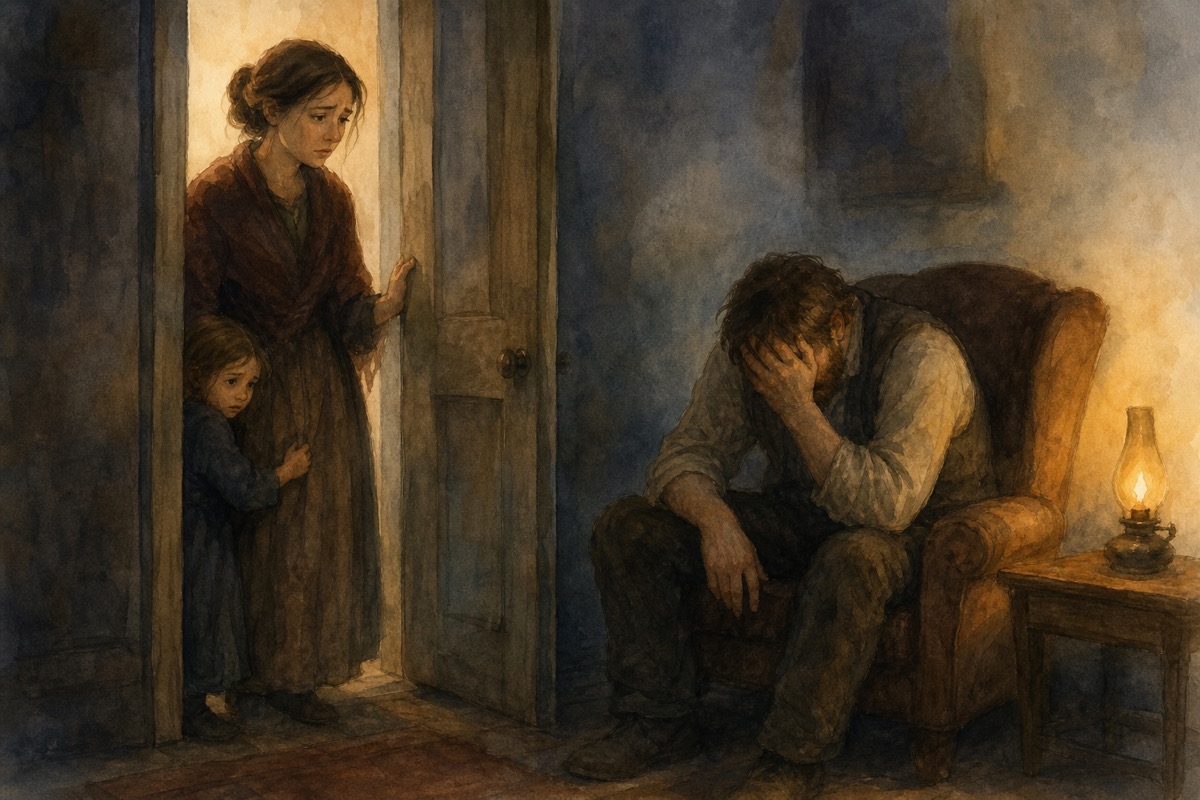
Laura stands in the doorway looking at him. She says it was not planned like this, but perhaps there was a will beneath her will. She asks almost quietly: can one be forgiven for what one did not know one was doing? The Captain does not want to talk about fog; he wants an enemy of flesh to fight. Without one, it becomes too cold. He asks for a pillow and fur. He calls out for old stories where strong men lost their weapons to a woman, and laughs without joy. Where is Bertha? he asks. Then he says what he should not say, but what many men have felt when standing still: a man has no future. The future belongs to women, they have the children. He whispers a childish prayer that he learned before he could read. The room becomes quiet as snow. The doctor's fingers on his wrist find nothing. The Pastor says judgment, the doctor says stroke. Laura says that in his last breath he prayed. The doctor lets faith own the end. Bertha holds tightly to her mother's dress. And the night takes more than weapons from a house that extinguishes the lamp and closes the blinds.
Midsummer. In the manor kitchen, birch twigs hang from the ceiling, and pots simmer. Kristin, the cook, sits for a moment dozing on a chair. The servants' song from the barn floats in like a warm breeze. The butler Jean enters, smooth in his shirt, sharp in his gaze. He says that Miss Julie, the young lady of the house, is dancing with the farmhands in the barn. Her engagement broke yesterday. It is as if she wants to trample everything that held her. And then she stands in the middle of the kitchen. She laughs too loudly, commands like a little general, puts Jean to the test. Speak French, she says. Drink with me. Kiss my shoe. Jean bows, but he also knows when to rise. That makes her more interested. Outside, the song grows wilder, and Jean hides Julie in his room when the crowd bursts in. They drink and laugh, but soon they drift out again. Then the house becomes too big and quiet for two people who were just too close to each other.
Jean and Julie stand by the table and hear their own breathing. She asks if he loves. He answers with maps and dreams: travel south, hotels by blue lakes, money rolling, no more kitchen floor. Julie wants to throw away all titles and say you. Jean looks up at the Count's gloves and boots that hang like invisible laws in the room. He tells about the boy who once sneaked into the lady's garden, hid among thistles, saw the white slippers, and decided he would never come up there. He threw himself into the pond and came up again. Julie blushes and pales in turns. She wants, and she does not want. She is brave and afraid. They cross a border that was first words, then glances, and now becomes action behind a closed door. In the house outside, the night ticks, and in the field the maypole watches the stars.
When they come out again, they are both changed. Now everything is a calculation. Jean talks about trains, about names in a hotel book, about how the world looks when you have disappeared. Julie wants love like a boat that floats. He opens a bottle of burgundy that is not his. She is startled by the smell of stolen daring. He calls her no better than a maid, and it stings worse than a needle. Then Julie opens her own chest of memories. Her mother hated differences, wanted to raise her daughter as a boy, wanted to burn down the old. The house burned for real, and money was hidden with an old friend. The father broke down. The daughter learned to rule with a whip. She got engaged to learn to bind, but the lash hit back. The chosen man went his way. Now she hates and loves men in the same grip. Kristin wakes and sees everything without a word. She says calmly that she will not serve someone she cannot respect. She goes to church, for there grace flows double when sin overflows. Jean and Julie look at each other with eyes that do not know what they see.
Dawn breaks. The mist on the meadow is thin as milk. Julie has packed a small bag. She does not want to face all the stares alone on the train. She holds a little birdcage close to her. The one soft thing she can carry. Jean says that cages do not belong on a journey. He places the bird on the kitchen block. The axe is heavy. A small stroke, and it becomes completely quiet in the cage and in Julie. She trembles, hates him, begs him, all in one mouthful. Kristin passes in the doorway and only says she is going to church. Julie cannot drink from that cup today. And then the bell rings in the hallway. The Count is home. Boots must be polished, coffee in half an hour. The sound is not just metal; it is will. Jean rises like a soldier who has received a command. He can no longer command anyone. He can only borrow a sentence from another place. He looks Julie deep in the eyes and says words that feel like magic: here is the way, go while the light is clear. Julie, already slipping, sees him as a tall black stove with glowing eyes. She asks for one last comfort, one lie that can place a pillow under the fall. He says crookedly that she is lower now. The bell makes the room tremble. Julie walks toward the hayloft with a knife in her hand. Jean stands alone with boots that do not belong to him, and a heart that has no one to be big for.
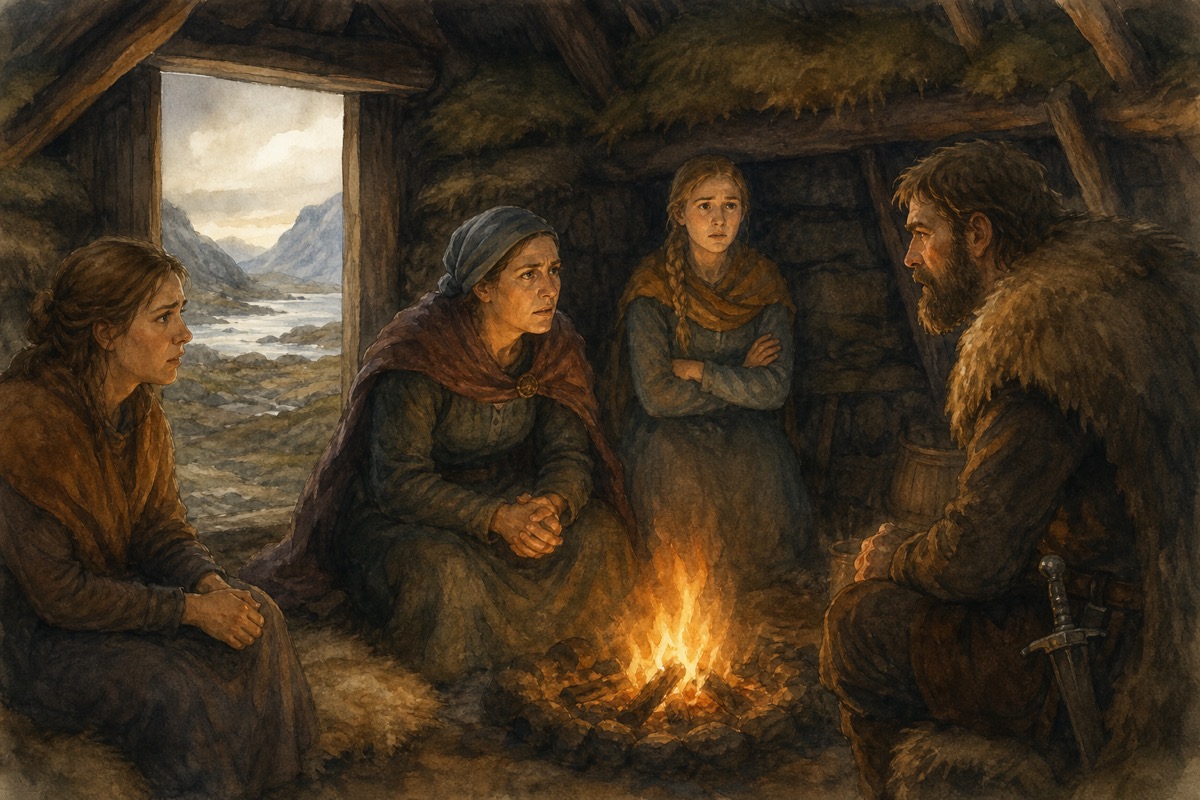
Far to the north lies a low turf hut pressed into the earth, like a hand holding heat. The wind howls like a wolf over the roof. Inside sits Gunlød by a small opening, and Valgerd spins and looks at her with eyes that have seen too much. They are refugees among enemies. Thorfinn, the master, is a man who wants to rule over stone and sea. He believes in the old gods who demand strength. Gunlød carries something else behind her forehead, a secret flame. The door opens, and Gunnar enters with the song of crusade and monastery in his voice. They were children together, now each has his own faith between them. He has searched for her and thinks he knows the smell of a secret baptism. He wants to take her south to altar lights and song. She stiffens when he says coward. She is the daughter of blood that does not bow. He leaves, but believes the bond between them will pull her after. She throws the bond into the fire and prays, stubborn and warm at the same time. Outside, the wind builds a mountain of dark clouds.
The storm breaks. Outside, the ship fights against the headland. Valgerd stands with a torch at the opening. She can blink to the right and send her husband into the sea, or to the left and save him. She saves. The flame flickers and dies for a moment, but she lights it again with a prayer to a God she does not know. Orm, the foster brother, enters with a crooked smile, as always. Thorfinn himself falls into the house, wet and wild and alive. When Orm hands him the horn and says a toast to Odin, Gunlød throws it to the floor. She says it straight out: I am a Christian. The father rages, but the words in Gunlød's mouth are new: you have taught me to fear the jarl, but not to love father. Your faith is hate; mine wishes love. Messengers come in the wind with a verdict: Thorfinn is an outlaw. All hands may take him. He laughs, counts men and axes, but something has already begun to shake in him. He asks a Christian thrall if prayer gives peace. The thrall says that no one can pray for another's soul. A man must pray himself. Thorfinn looks at his hand as if he has never seen it before.
The evening turns red with northern lights and fire. Someone calls from the yard. Orm draws his sword, Thorfinn goes out, is carried back in. He breathes hard, softer than before, and his palm finds his daughter's hair. Valgerd opens a trapdoor in the floor where the old gods' offerings were buried. She says she will burn with him rather than see him dragged away. But there is no fire inside, only red light outside. Gunnar appears in the doorway with a silver falcon on his cloak. Gunlød goes to him, and together they kneel. Thorfinn's hands, heavy and warm, rest on their heads. The words he never said come by themselves. Eternal, creating God. He dies in a calmer face than the one he lived with. The wind settles a little, as if the house holds its breath after a long song. Orm sits in the shadow and looks at what comes next day. But for Gunlød and Gunnar there is now a road that was not there yesterday. It begins outside the doorstep, where the moon lies like a coin on the ice.
Christmas Eve at a small ladies' dining place with the ugliest nickname. Two women sit at each their table as if playing chess without pieces. Mrs. X is a married actress, bright in voice and quick in her hands. Mademoiselle Y is unmarried and still as a closed book. Mrs. X unpacks words like gifts. She mentions dolls and toys to take home, slippers with tulips for her husband, and laughs at how he shuffles when the coffee is bad. She says he is faithful, because he has told her that someone tried to tempt him. Perhaps young girls chase him because he can push them a step up on the stage, she says. She uses the name Amelie for the other, with a mixture of affection and sharpness. Come tonight, she says, don't be difficult. It could be unpleasant to have me as an enemy. She smiles, but in the smile there are teeth. Mademoiselle Y says almost nothing. Between each word falls a little silence that makes the next sentence sharper. Mrs. X tells that when she first saw Amelie, she was afraid and chose friendship to avoid enmity. Yet unrest entered the house. The husband Bob could not stand the guest, or liked her too much, who knows. At the christening where Amelie was godmother, Mrs. X herself asked Bob to kiss her. Then something was lit that should not have fire.
Mrs. X moves to another table to breathe. Then she points to traces she has found at home. The tulips on the slippers she actually hates. The trips to the lakes instead of the sea, because Amelie does not like salt. The son named Eskil, like Amelie's father. Tastes in dresses, authors on the bedside table, dishes on the table, even the chocolate. Everything that was planted at Amelie's grew at Mrs. X's home. She says that Amelie's soul crept into hers like a worm in an apple and ate unseen, until only the shell and dust remained. She has tried to fly, but dark eyes hold her down. She imagines a large, still crab at the bottom just waiting. For a few minutes she becomes soft. Poor Amelie, who may be more unhappy than mean. But then she straightens her back. Perhaps Amelie has already lost Bob, she says. Perhaps the plan was for me to go, as she herself once did. I will not. Why give away what another desires. Now she understands something new: the quiet other cannot hold a man with tulips and words. But Mrs. X can. She almost thanks, for everything she has learned by looking at the other. She takes the slippers with tulips and goes home to be loved. Mademoiselle Y remains sitting in the silence that is even quieter than before, and feels for the first time that emptiness can hurt. And perhaps, if one listens closely, one can hear how some small bells in another house ring, and some other hands pray.